Teachers face constant pressure across lesson plans, assessments, differentiation, parent messages, and admin tasks. Smart AI tools can cut routine...

Technology in Education: Benefits of Educational Technologies
Schools face hard goals: close gaps, keep pace with tech, and prepare students for work. Today, technology in the classroom sits at the center of the education sector. Laptops, educational apps, and learning management systems expand access, speed feedback, and fit different learning styles. Context matters as well: clear goals, trained staff, and a fair learning environment. The impact of technology does not end at graduation. Strong technology skills often align with majors that show higher early-career pay. In short, the benefits of technology in education support progress now and shape graduate earnings by major later.
Table of Content
ToggleWhat Counts as Educational Technology Today
The broad array of educational technology spans the digital tools and learning platforms that classrooms use every day. Devices handle access to educational resources; tools like Google Classroom and Canvas track courses and grades; gamified learning apps support practice; AI tutors guide steps; assessment tools check progress; AR/VR runs safe simulations; and assistive tech opens content to every learner. Each tool fits a job: instruction, practice, feedback, collaboration, and access.
When an educator chooses to smartly integrate technology, they can teach in ways that match each student’s learning style, lift student engagement, and help students learn within a fair environment. Technology provides reliable study support as well. For example, homework AI allows a student to walk through a maths proof or a science problem one step at a time. The student sees the order of steps, checks where an error appears, and compares methods. This cuts guesswork, helps individual students, and ensures they enter class the next day with a clearer path forward. The aim stays steady: understand the idea, test it, and apply it with confidence.
What the Evidence Says About Learning Gains
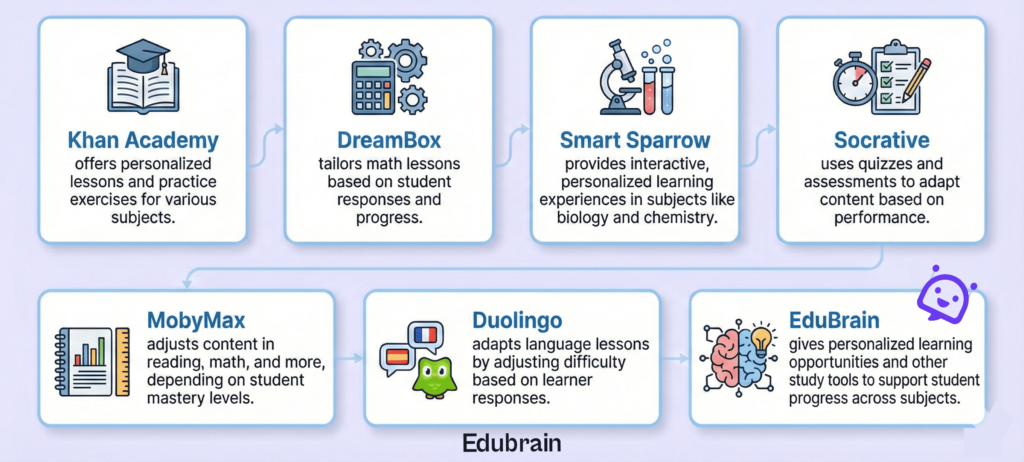
Studies reveal that the results are clear, but dependent on specific conditions. Randomized controlled trials show that instruction supported by technology in education has a positive effect most of the time, provided that schools set goals for the use of educational technology, train teachers, and use rich learning materials. Adaptive learning platforms allow each learner to move at their own pace, using technology to tailor lessons to individual learning needs. This helps personalize learning without losing peers.
Systems providing instant checks shorten the feedback loop, leading to higher accuracy and critical thinking. Technology enhances the learning experience by offering targeted prompts. The effects depend on the subject: in math, there is steady growth; in reading, improvement is best when software links to high-quality texts. Platforms that sort class materials by task help teachers run short quizzes and drills. An AI study notes generator can form short summaries, ensuring students receive a clear record of key points. Over time, these habits support steady study patterns and prepare pupils for fields that rely on data and software.
Platforms that sort class materials by task help teachers run short quizzes, recall drills, and step-by-step examples. An AI study notes generator can also form short summaries after a lesson, so pupils return the next day with a clear record of key points. When the room has simple norms for device use, teachers spend less time on clerical work and more time helping pupils. Over time, these habits support steady study patterns, reduce course drops, and prepare pupils for fields that use data and software in daily work.
Clear Roles for Classroom Tech
Results improve when goals stay clear and tools match lesson plans. An educator must set active tasks, device rules, and use platforms that keep work visible. Google Classroom, for example, tracks deadlines and feedback in one place. In that frame, integrating technology in the classroom can make learning better: adaptive learning practice closes gaps, dashboards surface errors fast, and quiet voices get support.
What lifts learning outcomes:
- Explicit learning goals that everyone can name
- Short, active tasks with time limits to engage students.
- Structured use of technology with no side tabs.
- Ongoing teacher PD with coaching time
- IT support and planning time from school districts
The problem arises when the day is controlled by screens. Unstructured “device time” or poor alignment with the curriculum diminish progress. When teachers can use technology effectively, it should foster collaboration and improve teaching and learning, rather than merely repeating the textbook. Equal factors are true for higher education as well.
Digital Skill Levels and Early-Career Pay
The ability to effectively use technology is a significant factor in shaping life decisions after school and can affect salaries later on. Fields heavily dependent on new technologies tend to have higher salary rates for fresh graduates. Students encountering code editors and datasets as part of their classroom activities are more likely to have the confidence required to pass through challenging first-year courses in their chosen degree program.
Early exposure reveals a student’s strengths, reducing major switching and lost credits. The study setup before university also matters. Spaced recall and short quizzes turn theory into skill. Together, these habits build a base that carries into college work, whether in traditional settings or higher education and the modern shift toward online education. Even if a student is taking a course entirely online, students gain vital habits that carry into the first steps of a career. A flashcard maker helps create small, repeatable review sets that support steady memory growth without extra cost or extra time. Together, these habits build a base that carries into college work and the first steps of a career.
Support for Different Learning Styles
Access shapes results. First, some homes do not have steady internet or a quiet place to study. When a school lends devices and shares free resource options, the gap narrows, making education more accessible. Support for SEND and ELL pupils depends on tools that open the lesson to more learners, making education more inclusive. Technology allows screen readers, captions, and translations to help pupils take part. This is particularly beneficial for students who need different modalities.
| Access factor | What helps |
| Home internet or device | Device loans, hotspot checkout, lab or library hours |
| Assistive or translation tools | Built-in options, staff setup, quick onboarding |
| Study space after school | Quiet room, supervision, late hours |

However, attention depends on structure. Frequent shifts between tasks slow recall. Therefore, a short routine helps. Set tech-on and tech-off points. In the end, clear steps keep work inside class time, improving access to learning and ensuring all students succeed.
Teacher Workflow, Feedback, and Assessment
Auto-grading is the main factor behind the rapid handling of quizzes. Dashboards indicate errors by objective, so the next mini-lesson is aimed exactly at the gap. Technology can enhance communication between teachers and students. Students stay actively engaged, whereas teachers get back their time for interactive lessons. Comprehensive educational resources provide item banks and rubrics; thus, planning becomes choosing rather than redoing.
Comprehensive online resources provide item banks, rubrics, and exemplars, thus, planning becomes choosing rather than redoing.
Additionally, certain generative AI tools can be of assistance in very short periods of time. An illustrative instance: a pupil takes a photo of a confusing algebra work, and by sending the picture to an image to answer AI, receives step-by-step instructions. At the click of a button, a pupil taking a photo of a confusing math problem receives step-by-step instructions. The educator looks at the process, determining whether to challenge further. This flow lifts participation without adding to the marking load, improving the overall quality of education for students and teachers alike.
Case Snapshots: What Implementation Looks Like
A primary rural class implemented technology integration using an adaptive reading tool. The class size was 22. Staff had short PD afternoons. After eight weeks, decoding errors fell. Key steps in this case:
- Short practice window each day
- One brief support session per pupil
- Stable access to the tool
- Simple tracking of decoding accuracy and speed
A secondary history department added low-stakes quizzes in the LMS. Technology enables quick feedback. In parallel, the math staff introduced linear algebra AI to show worked steps. Students get extra support that reduces common step slips without replacing class instruction, making learning more interactive. By the end of the term, recall scores rose, and fewer pupils missed core dates and names. In parallel, the maths staff introduced linear algebra AI to show worked steps in matrix tasks after class hours.
Guardrails: Privacy, AI, and Safety
Privacy is the foremost concern as edtech is becoming increasingly popular as educational tools. Educational institutions limit data collection and inform what each platform records. With AI increasingly popular as educational institutions are embracing technology, parents must be aware of what is stored on a device. Transparent opt-out options are of importance.
AI is capable of detecting copied text; however, teachers still inculcate good writing habits. As technology continues to evolve, schools put forth simplified policies alongside legal text. Such a blend shields learners, maintains trust, and keeps a place for real student success.
Conclusion
The main point is clear. The benefits of educational technology are realized when it has a purpose and a routine, not when it fills every moment. Tools that show steps and give quick feedback help students stay on track. The use of technology in education prepares them for future courses and jobs. The many benefits of technology only hold when schools set clear rules and support access. With those pieces in place, edtech becomes part of normal class work, and more pupils finish with the skills they need.
Explore Similar Topics
Homework has been a cornerstone of education for generations. It has sparked endless debates among educators, parents, and students. Some...
Artificial intelligence (AI) is transforming educational technology. This change is particularly notable in mathematics. Traditional teaching methods now integrate with...