
In a world where technology increasingly defines our interactions, using AI for flirting is no longer a futuristic concept —...
How Many Presidents Went to West Point?
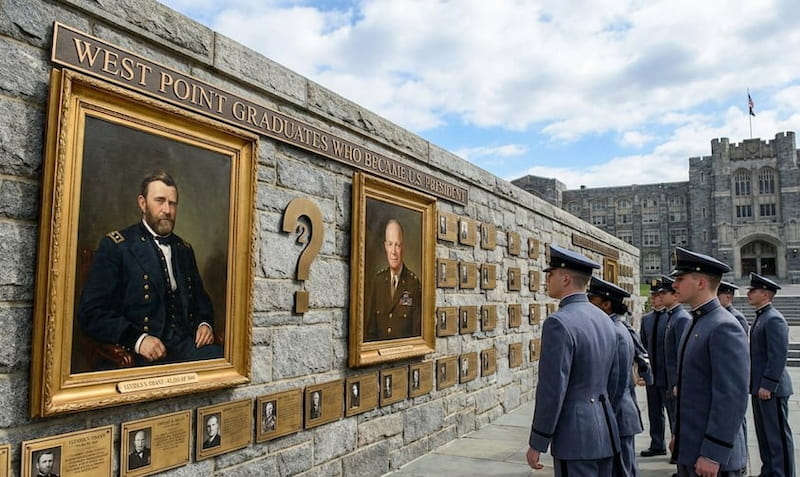
You may know West Point as a symbol of American leadership, yet only a small number of presidents came from its halls. The United States Military Academy at West Point opened on March 16, 1802, and now holds the title of the oldest US Military Academy.
TL;DR: Only two men in the Oval Office had a West Point graduate mark in the record: Ulysses S. Grant and Dwight D. Eisenhower, the Allied commander in World War II. This article from our team at Edubrain explains the number, their stories, and how West Point compares with other elite schools.
Table of Content
ToggleHow Many Presidents Came Out of West Point?
The count is small, despite West Point’s humongous reputation for leadership. As we just mentioned, only two U.S. presidents became West Point graduates of the United States Military Academy (also known as the US Military Academy), which remains one of the most influential military academy routes in U.S. history.
Here is who they are:
| President | West Point class year | Years as president | Major prior leadership role |
|---|---|---|---|
| Ulysses S. Grant | 1843 | 1869–1877 | Commanding General of the U.S. Army |
| Dwight D. Eisenhower | 1915 | 1953–1961 | Supreme Allied Commander in World War II |
Across all U.S. service academies, only three presidents are graduates: Grant, Eisenhower, and Jimmy Carter (U.S. Naval Academy).
Each began as a West Point cadet or midshipman long before national politics shaped their public image. If you are interested in this, a quick tool like History AI can help you keep key dates straight when you compare the Civil War era with the global scale of World War II.
U.S. Presidents Who Graduated from West Point: Why Just Two?

West Point’s presidential number remains low, as the United States Military Academy is geared towards a different kind of national influence. The academy provides training for leaders to pursue extended careers in the military and public service. The majority of the graduates will be military officers who will be on the front lines, leading units, managing complex missions, and serving the country away from the campaign trail. West Point has, throughout its existence, produced fewer than 65,000 graduates. That is a substantial leadership pool, even if only two presidents have emerged from it.
Politics, however, tends to follow a different path. Most presidents gain their influence through a major university and a network of first-rate law schools. Harvard University, Yale Law School, and Columbia Law School seem to be the most frequent entries on presidential education lists. Rutherford Hayes took up law before the Civil War, a reminder that the legal profession has been at the core of national leadership for many generations.
Therefore, although a few West Point graduates may eventually become cabinet members or be appointed vice presidents, the main route leading out of the Academy is one of command, service, and honor rather than electoral life. This difference is instrumental in explaining the low number of presidents who have attended West Point, despite the school’s significant role in the U.S. education and leadership sectors.
The Two West Point Presidents in Brief
The United States Military Academy is usually considered to be a major source of presidential education when people casually mention where presidents attended college. The school is located on the top of the Hudson River, with the West Point Plain serving as a daily reminder of the Army’s origin and its service to the people.
The Long Gray Line, a broader term, comprises not only leaders in the military and government but also two presidents who have come from this military academy. Moreover, West Point was initially an engineering school, which not only determined its early character but also its value to the nation. Nowadays, the history of the Academy also includes female graduates, and thus, the Academy’s leadership heritage is acquiring a new chapter.
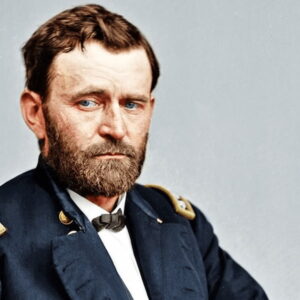
Ulysses S. Grant

Grant entered the Academy as a West Point cadet and graduated in 1843. He later rose to the top Union command during the Civil War and then became president. A National Park Service overview notes that he placed 21st in a graduating class of 39, indicating a solid, middle-of-the-pack academic record in a demanding system. His path differs from that of early founders such as George Washington and Thomas Jefferson, who shaped the young republic long before a formal national academy system took complete form.
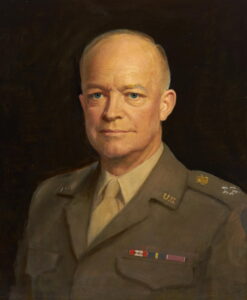
Dwight D. Eisenhower

Eisenhower graduated in 1915, a class later known for an unusual number of future generals. He also had ties to the West Point football team before an injury ended that chapter. His later command of Allied forces in World War II set the stage for a presidency defined by the early Cold War. His military-to-civilian leadership arc stands apart from paths associated with major civilian schools such as Princeton University or Yale University, which appear more often on presidential education lists.
Taken together, Grant and Eisenhower show why West Point matters in presidential history, even with a short list of names. The Academy’s system can shape leaders who handle national crises, yet it does not function as a steady political launchpad in the way some elite civilian routes do.
This is a helpful contrast for anyone who writes about how education, war, and public leadership intersect across eras. When you map these links in a paper, from West Point to Ivy League law paths and onward to modern eras such as the Vietnam War, the proper framework can keep your argument clean and consistent. If you need a quick way to organize that bigger picture without losing the West Point thread for a political science homework, many tools can help you track institutions, leadership models, and timeline logic in one place. Everything will be understood much more easily.
West Point vs. The Universities That Dominate Presidential Education
The United States Military Academy is situated in a pivotal location in American history. Its military training, tough admissions process, and long-standing practice of accepting foreign cadets make it different from the usual path to an elected president. The campus, with a landmark like Eisenhower Hall, is primarily shaped by a leadership style focused on service and authority. Yet, the number of presidents from this Academy remains very small.
On the other hand, Harvard University is referred to as the university with the most graduates who later became presidents. Eight American presidents hold degrees and are associated with Harvard College, Law School, or Business School. Yale University is usually ranked second, with five presidents linked to Yale College and Yale Law School.
Those numbers also rely on the definitions. “Attend” may be a short studying or transfers, while “graduated” confers a completed degree. The same reasoning is used for the Naval Academy to consider Jimmy Carter as the next president of a service academy, whereas West Point itself has only two presidents.
It is helpful to look beyond the present. The very first president, George Washington, gained his initial fame through solid, practical work, including a career as a surveyor, not a university degree. Abraham Lincoln was raised without a college education, whereas Jefferson Davis, a leader of the Confederate States, was educated at West Point.
In fact, presidential education has primarily consisted of four pathways: Ivy League schools, other private institutions, public universities, and service academies.
Top U.S. Institutions by Presidential Alumni (Attended or Graduated)
| Institution | Number of presidents | Notable examples | Notes (undergrad vs grad) |
|---|---|---|---|
| Harvard University | 8 | John Adams, JFK, FDR, Barack Obama | Mix of Harvard College, Harvard Law, Harvard Business |
| Yale University | 5 | Taft, Ford, George H.W. Bush, Bill Clinton | Combination of Yale College and Yale Law |
| United States Military Academy (West Point) | 2 | Grant, Eisenhower | Both West Point graduates |
| U.S. Naval Academy | 1 | Jimmy Carter | Service-academy graduate outside West Point |
What This Says About Leadership, Merit, and Institutional Influence
West Point rewards discipline, judgment, and resilience under pressure. Life at the Academy tests leadership in everyday settings as well as formal training, from the mess hall to demanding coursework and field exercises. That experience can prepare officers for high-stakes roles soon after the first class year. The presidency, however, runs on a different selection system. Party coalitions, donor ecosystems, media narratives, and public perception shape who can win a national election. This gap helps explain why relatively few leaders who attend West Point reach the White House, even though many become trusted commanders and senior public servants.
Civilian routes often provide a faster lane into politics. Harvard University appears repeatedly in presidential education histories, and Barack Obama reflects a modern law-school-to-politics pattern. The country has also produced major leaders since the Civil War era who never followed an academic path at all. In this sense, the admissions process at West Point selects for service leadership rather than campaign advantage. A head coach can translate talent into wins on the field; the Academy focuses on successfully leading people when national outcomes and lives are at stake. If you want a quick way to connect these education pathways to political outcomes across eras, the social studies AI solver can help you organise timelines and comparisons without losing clarity. This way, you’ll be able to fully understand these connections.
Conclusion
The essence is simple: two U.S. presidents graduated from West Point. Nevertheless, the Academy has a greater influence than that small number. West Point has long influenced the leadership of the Army command and national security. It has permeated the country’s major agencies and crisis positions.
Even where electoral history is unimpressive, its historic position as the oldest service academy still has symbolic influence in American civic life. Compared to the Ivy League pipeline, it makes sense that West Point is more true to its mission of producing service-centric leaders. In contrast, higher education institutions such as Harvard are more often found to be closer to the political launchpad.
Latest Articles
Artificial Intelligence is now the centre of technological evolution. From healthcare to the automotive industry to finance and education, AI...
Artificial intelligence is no longer a novelty for students. It’s part of their routine. It shows up when an essay...