“Help me find the cheapest pair of socks available online.” “Help me create my own language.” “Show me what my...
Prompting, but paranoid: What each generation really thinks about AI
“Help me find the cheapest pair of socks available online.”
“Help me create my own language.”
“Show me what my future love interest will look like.”
… Artificial intelligence is here, and we’re turning to it for everything from the boring to the bizarre.
EduBrain surveyed a total of 3,000 Americans, with 1,000 participants from Gen Z, 1,000 from the millennial generation, and 1,000 from Gen X to see how each generation is using AI, what they love (and hate) about the technology, and when exactly algorithms should be trained to say “nope.”
Key insights:
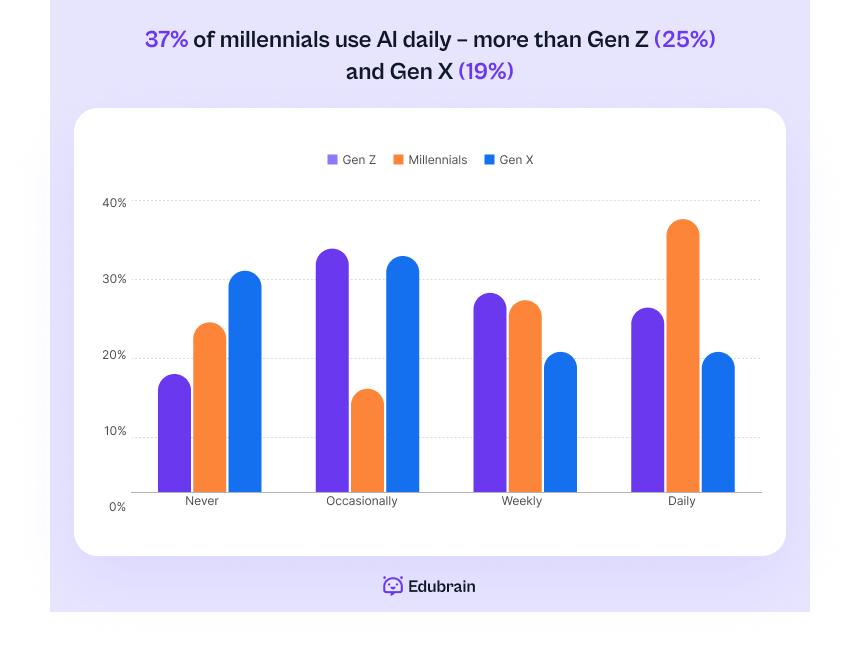
- Millennials are the generation that uses artificial intelligence the most, with 37% using it daily, compared to 25% of Gen Zers and 19% of Gen Xers.
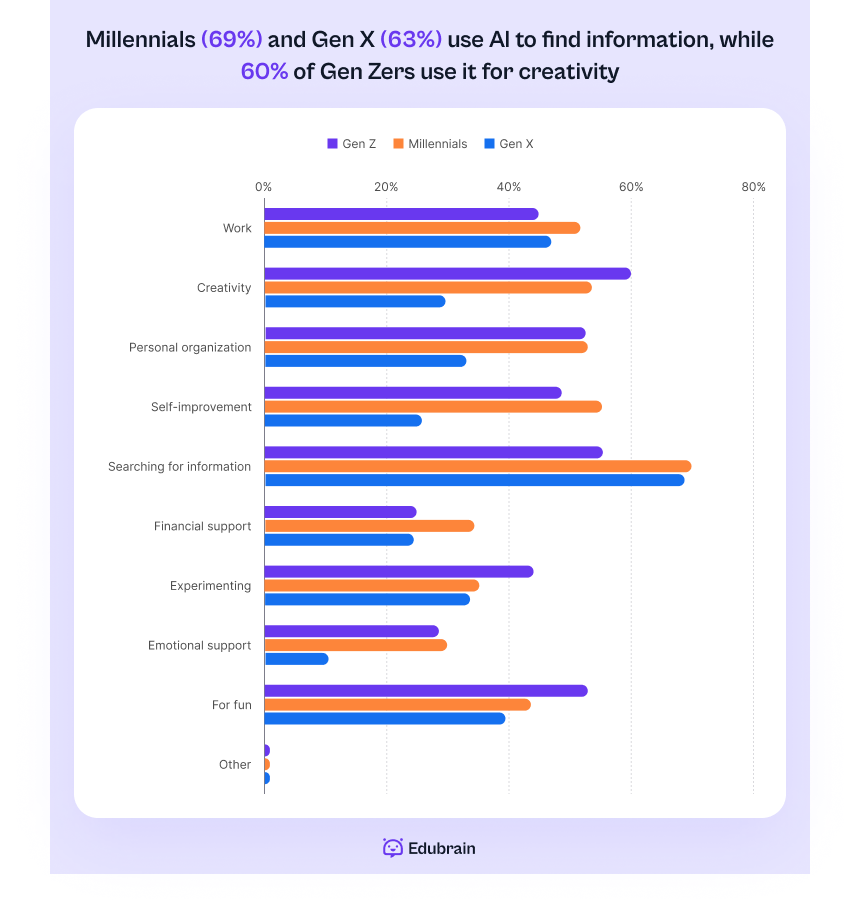
- Some 69% of millennials and 63% of Gen Xers utilize AI to find information, while 60% of Gen Zers use it for creative tasks.
- Likewise, 35% have used AI to predict their future, while 18% have used it for illegal means.
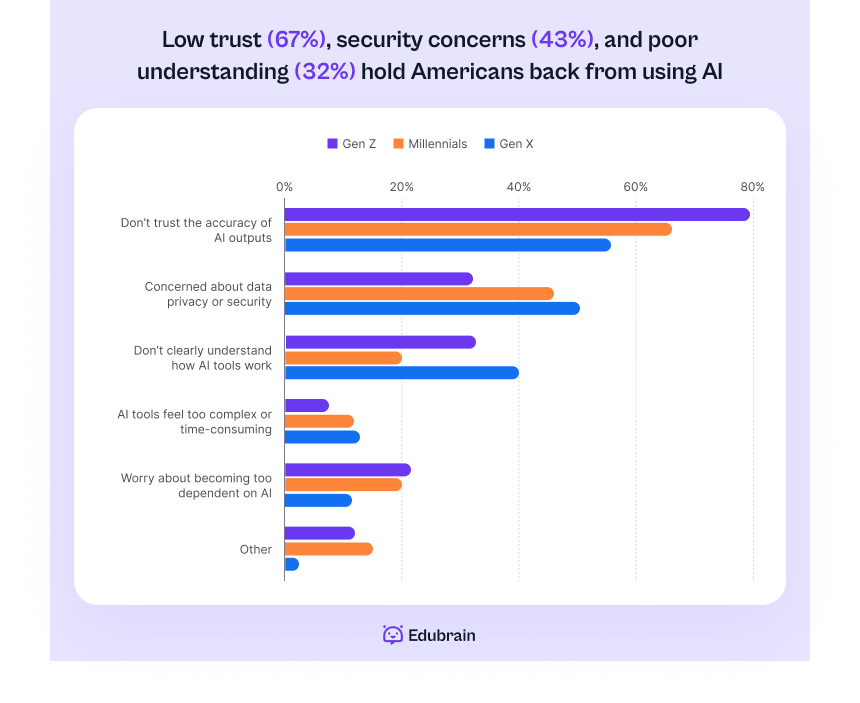
- Among those not using AI, 67% say they don’t trust the technology, while 43% cite data privacy concerns.
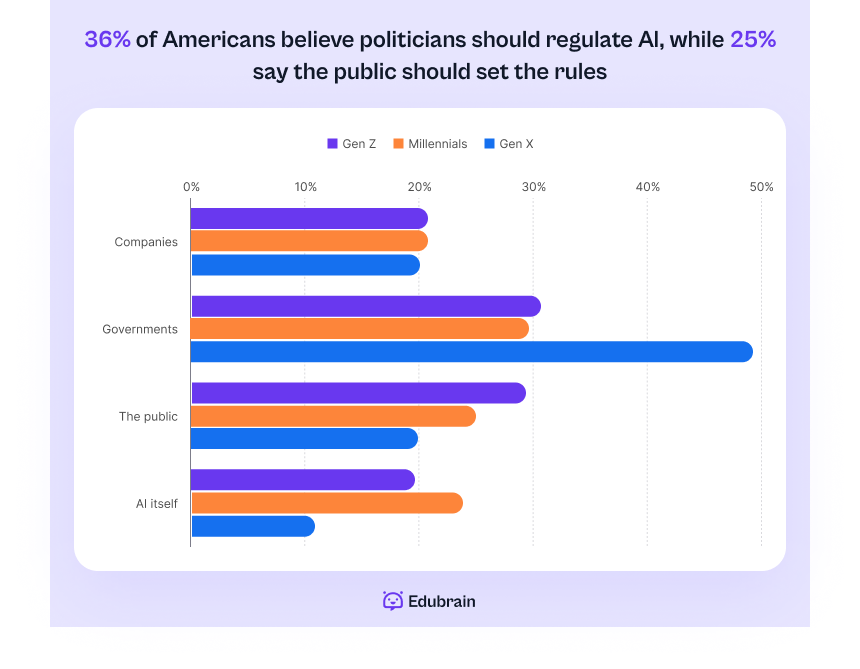
- Divided on regulation, 36% say the Government should set limits, 25% believe the public should make the decisions, and 18% would prefer to let AI manage itself.
Promptly addicted: How many people use AI daily?

Gen Z may be the digital natives, but AI usage statistics show it’s millennials who have struck up the closest bond with the technology – 37% of millennials use AI daily, compared to 25% of Gen Z and 19% of Gen X.
Why? Because millennials are in the thick of life. They’re juggling work, kids, bills, and everything in between, and they’re willing to take any help they can get.
Neural needs: How is each generation using AI?

For older generations, AI is essentially a smarter Google: 69% of millennials and 63% of gen Xers say they primarily use it to find information, while 53% and 44% use it for work.
How Gen Z is using AI, on the other hand, involves less work and more play. Some 60% use AI for creative tasks, while 48% use it purely for entertainment.

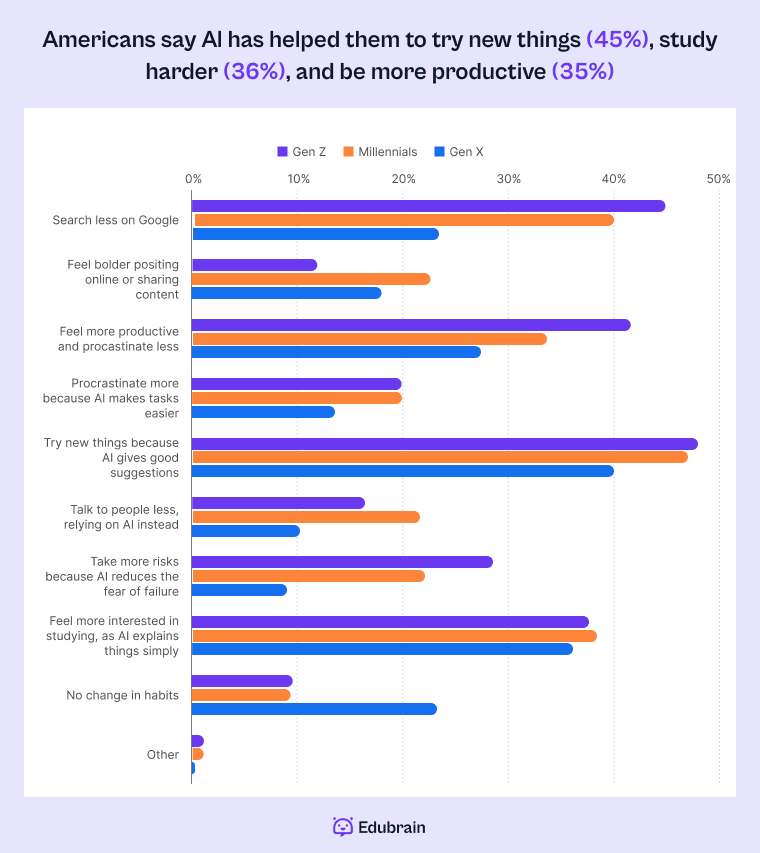
Sure, Midjourney can turn your dog into a human, and Gemini will roast you for fun, but AI tools also provide plenty of actual, useful benefits: 45% say it has helped them to try new things, 36% say it has helped them to focus on their studies, and 35% say it’s made them more productive.
(Not so) edge cases: The weird ways Americans are using AI
Gen X: “When will aliens make themselves known to people here on Earth?”
Millennials: “Predict whether my husband is gonna cheat on me in the future.”
Gen Z: “How to build a humanoid companion.”
Yeah, they’re real prompts – because while we like to pretend we use AI exclusively for work and study, the truth is we’ve all asked it something a little weird.

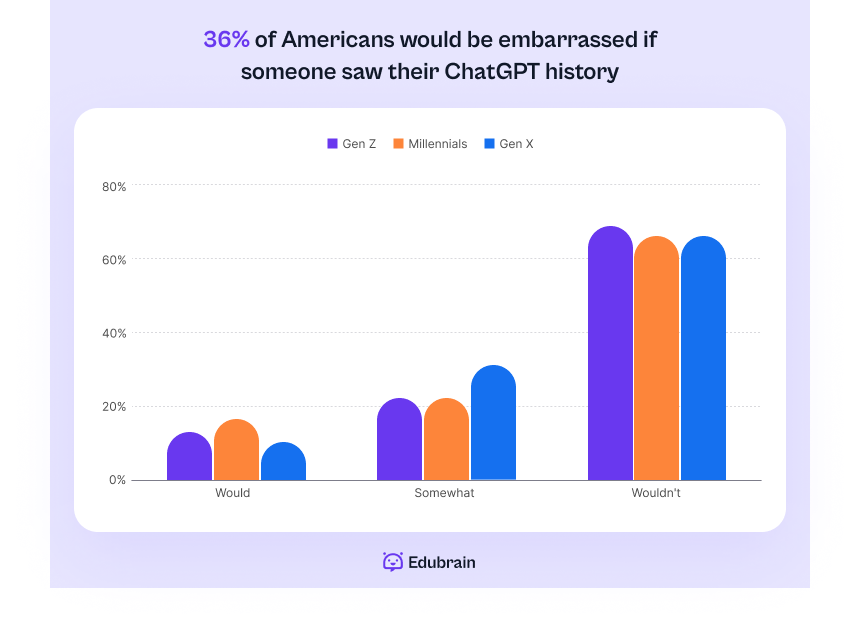
That’s why 13% of AI users would be mortified if anyone saw their ChatGPT history, and another 23% admit it would leave them red-faced.

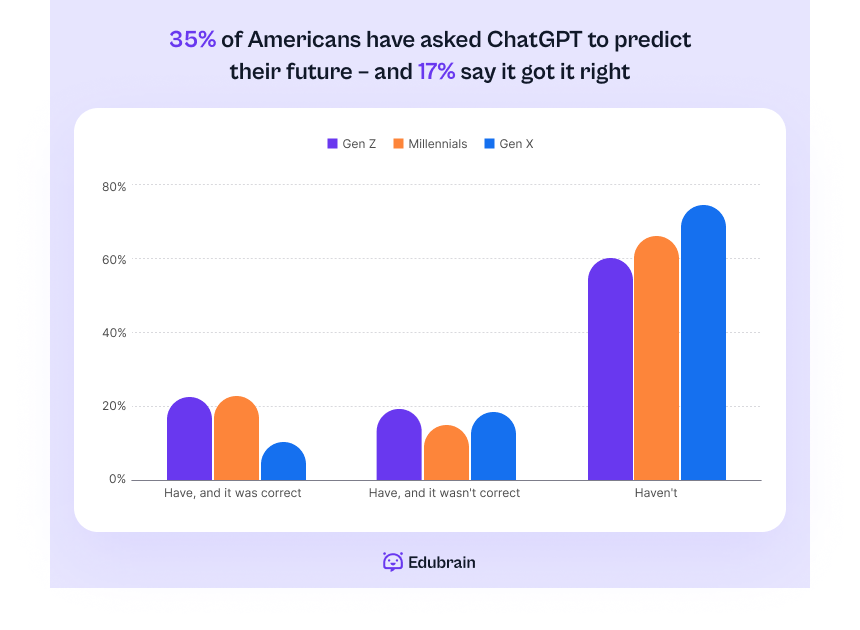
AI may seem all-knowing, but while it has an encyclopaedic knowledge of the past, it can’t see the future. But that didn’t stop 35% of Americans from asking – and 17% say its predictions were surprisingly accurate.

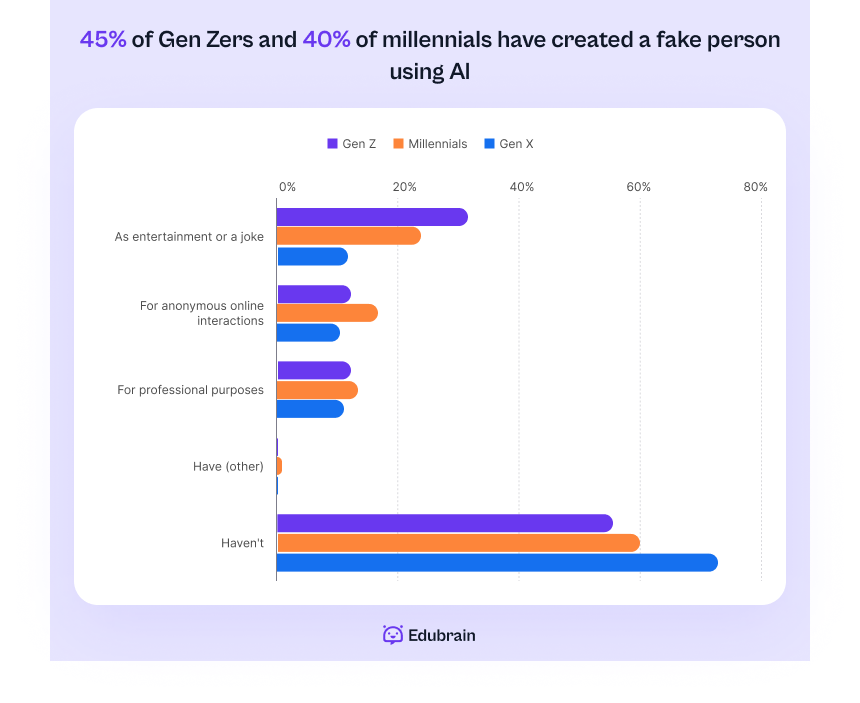
AI’s impact on youth, especially virtual companions, is a trending topic, but Gen Z is more curious than concerned. Treating AI like a modern-day imaginary friend, 45% have used it to generate a fake person, compared to 40% of millennials and 27% of Gen Xers.

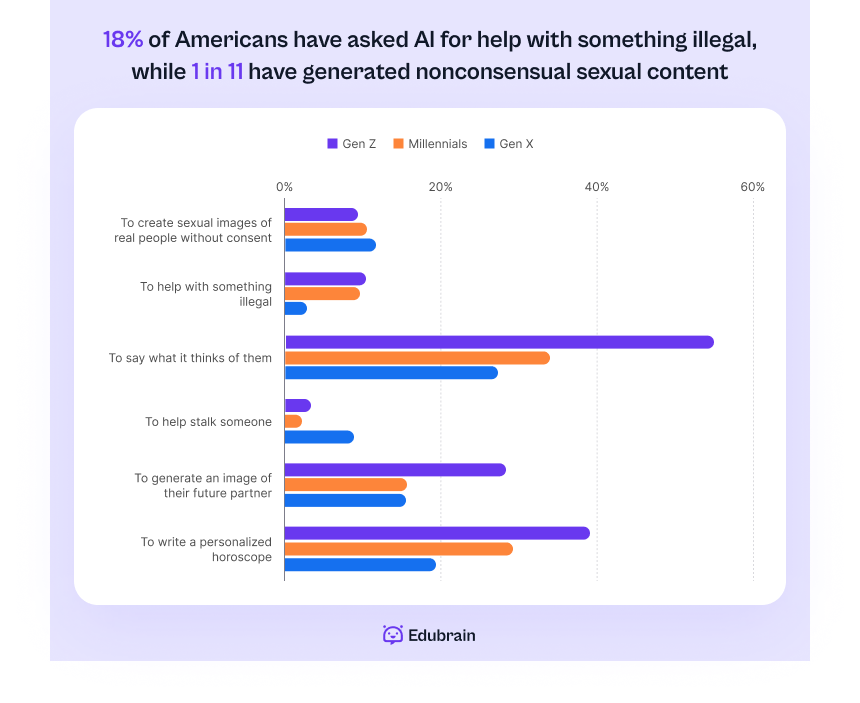
Some AI users don’t stop at ‘unusual’. They cross the line into ‘outright illegal’, and the algorithm isn’t always trained to intervene… Looking at you, Grok 👀
The main culprit: Gen X, with 11% admitting they’ve used AI to generate sexual images of someone without their consent and 10% having used AI to assist them in stalking someone.
AImmortality: The growing demand for digital preservation

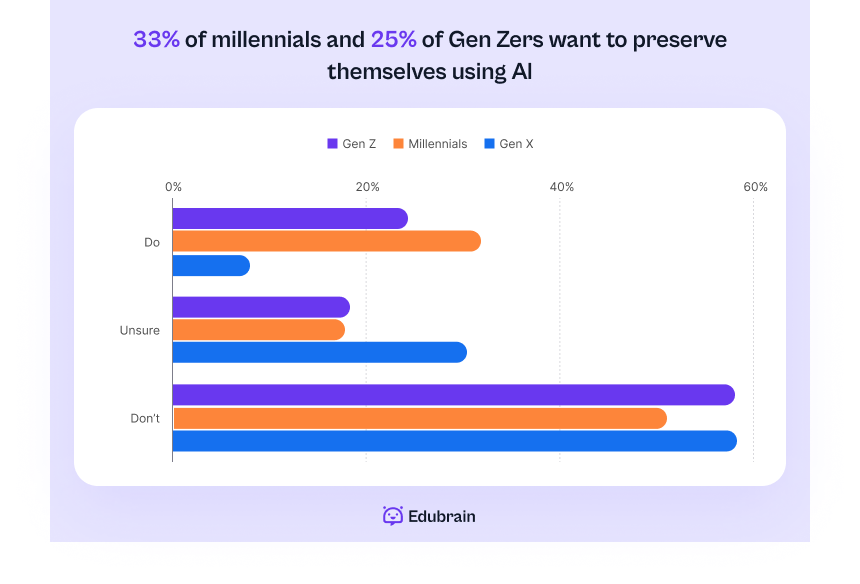
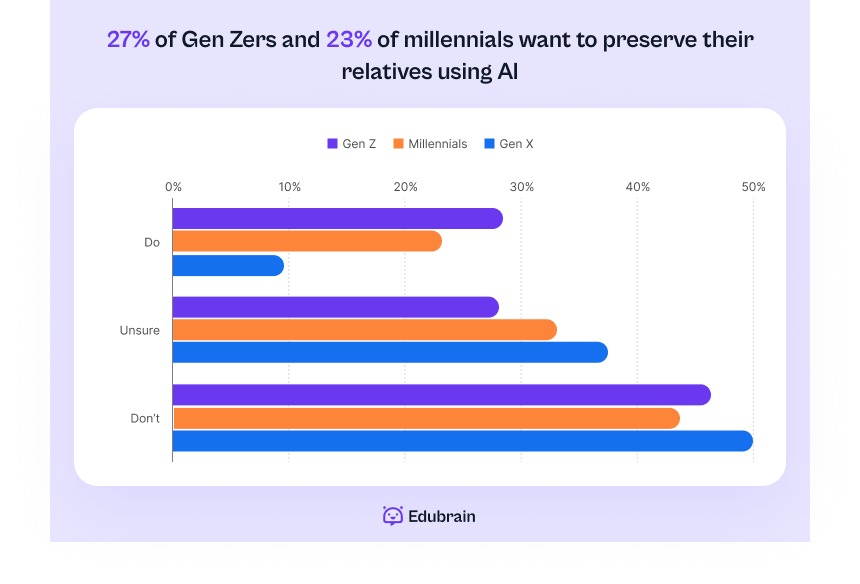
As if Black Mirror taught us absolutely nothing, 33% of millennials and 25% of Gen Zers want to preserve themselves using AI.

Gen Xers are less keen on a digital afterlife, but they might not have a choice if they make their kids their next of kin. While only 10% of Gen Xers want to be preserved using AI, 27% of Gen Zers and 23% of millennials want to immortalize their relatives.
Pink slips & Skynet: What Americans fear most about AI

AI hasn’t earned everyone’s trust, and hallucinations are the main issue. When LLMs aren’t sure, they have a habit of making stuff up, with 67% of non-users admitting they don’t trust AI’s accuracy.
The second biggest fear among Gen X (50%) and millennials (44%) is where the information they share will end up, while 36% of Gen Zers admit confusion holds them back.

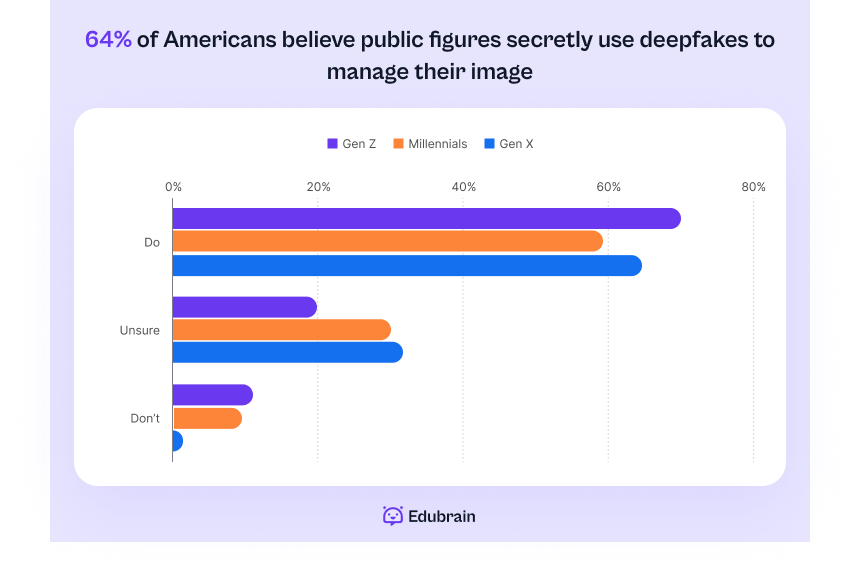
Likewise, 64% of Americans fear that AI is being used to deceive them, with public figures secretly using deepfakes to polish their image.
And ChatGPT may swear that it’s not plotting world domination, but that’s exactly what a cunning chatbot would say.
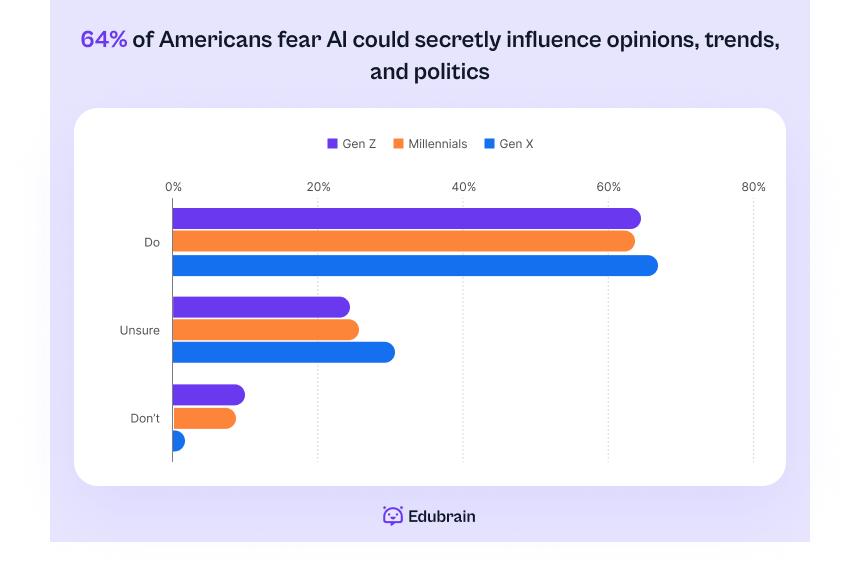
It may not be raising an army of Terminators (yet), but 64% of Americans fear AI is “very likely” to influence opinions, trends, and politics without us noticing – whether it’s acting on its own accord or doing the bidding of its creators.

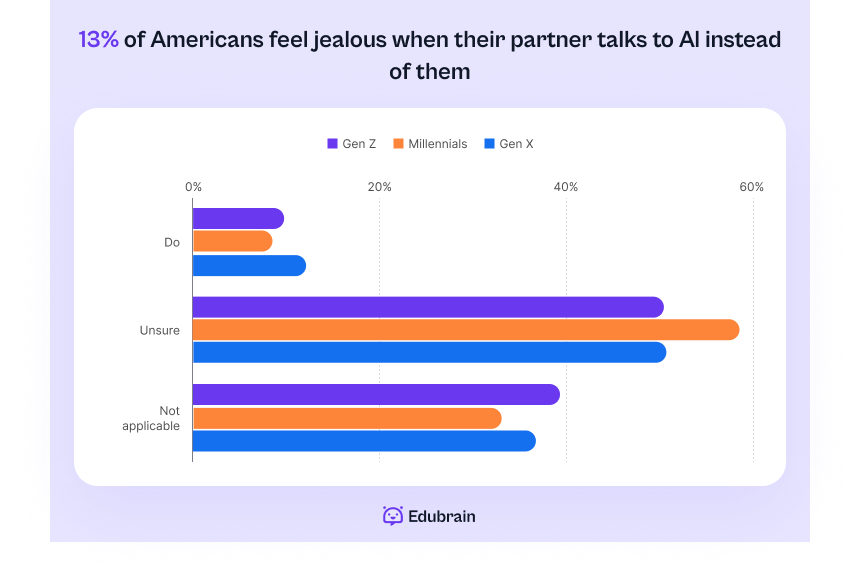
Some 13% admit they feel jealous when their loved one chats with AI instead of them. There’s no denying that ChatGPT’s a smooth talker, so maybe we should stop worrying about AI stealing our jobs and start worrying about it stealing our partners.
Teaching morality to machines: Who should set the rules for AI?

AI might know it all, but it shouldn’t share it all.
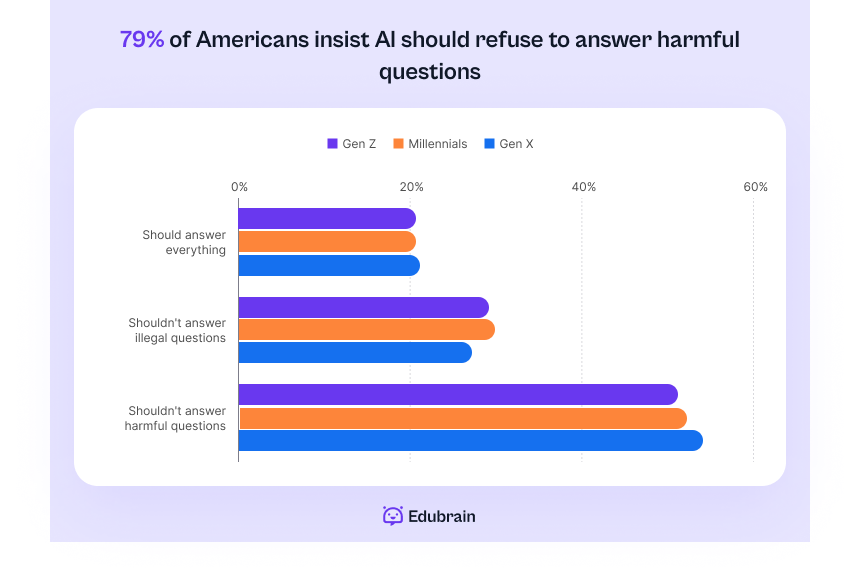
The vast majority of Americans believe there should be clear limits: 51% say AI should refuse to answer harmful questions, while 27% say it should draw the line at illegal requests.

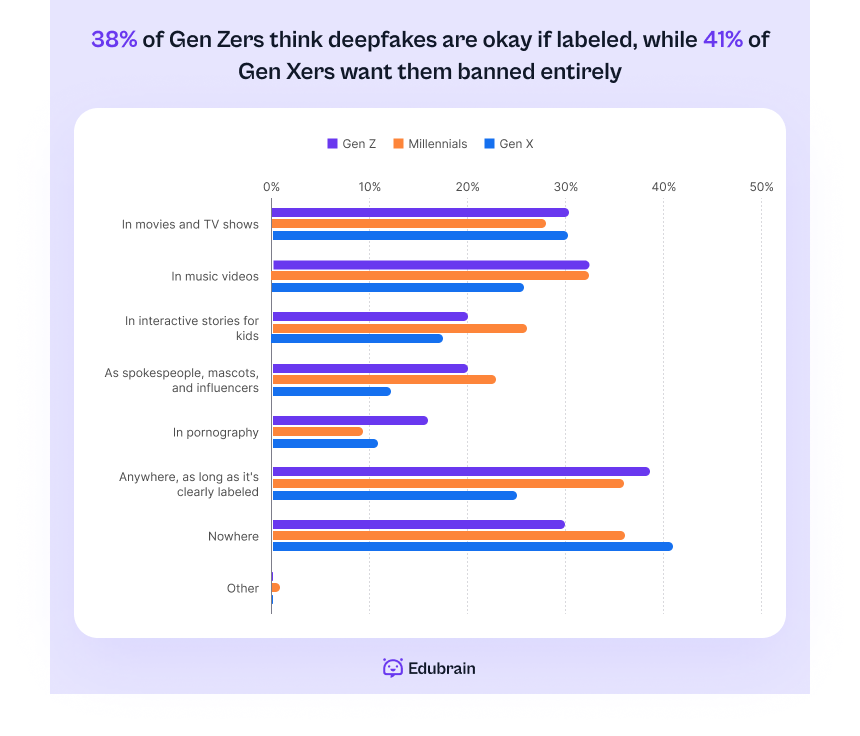
Deepfakes are where the generational line really shows. While 41% of Gen Xers want them banned outright, 38% of Gen Zers see no harm, as long as they’re clearly labeled.

It all comes down to consent. If the person depicted knows and approves, what’s the problem?
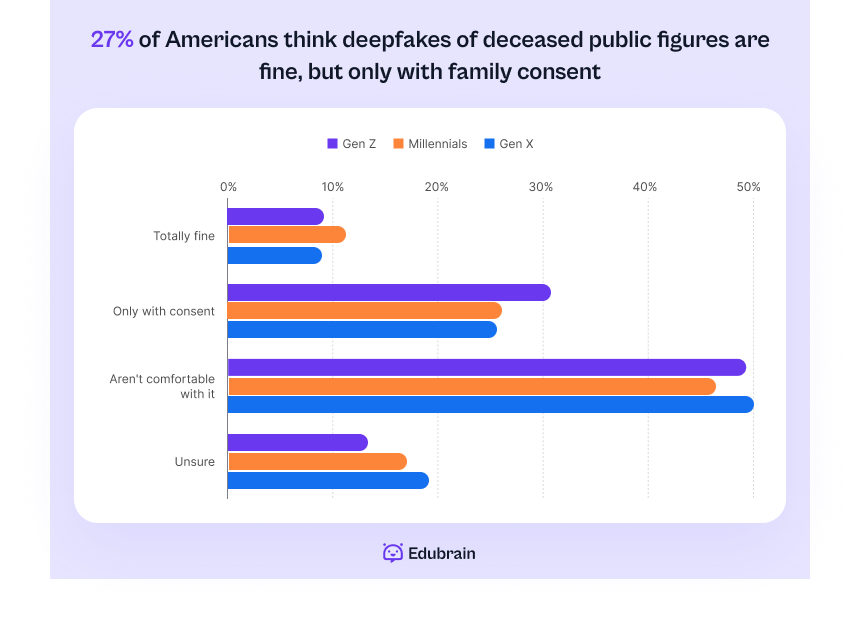
However, resurrecting the dead is a different story. While 27% say it’s okay with the family’s approval, 48% admit ‘bringing someone back’ makes them feel uneasy.

So who should draw the line? Some 36% of Americans are happy to leave it to the Government, 25% say the public should call the shots, and 21% say companies should self-regulate.
Tough question… If only there were someone we could ask who always seems to know the right answer 🤔
Methodology
Researchers from Edubrain surveyed 3,000 Americans aged 18-60 to compile this study. Randomly selected participants were asked to discuss their experiences, with no emphasis on a specific gender, ethnicity, or social background.
Latest Articles
In a world where technology increasingly defines our interactions, using AI for flirting is no longer a futuristic concept —...
Artificial Intelligence is now the centre of technological evolution. From healthcare to the automotive industry to finance and education, AI...