

Turabian Citation Generator
Are you sure you you want to delete all the citations in this list?
Benefits of a Turabian Citation Generator

One Saved Entry per Source, Even After Big Edits
The Edubrain Turabian citation generator stores one reference for one source. After that, every note or in-text citation points back to the same record, so duplicates stay out.
Notes and Bibliography Stay Linked
Footnotes, endnotes, and the final bibliography must agree. Edubrain keeps note numbers and bibliography entries tied to the same source, even after a paragraph move.
Fast Input From DOI, ISBN, or Direct Links
A DOI often fits journal articles. An ISBN fits books. A direct page link helps when you cite websites. This route cuts mix-ups from title search and supports accurate Turabian citations in Edubrain.
Clean Repeat Notes for Subsequent Citations
Turabian expects shorter forms on subsequent citations in notes. A generator helps keep the first note full, then uses a short form later, so the note section stays steady.
Easy Switch Between Two Turabian Systems
Some courses ask for notes bibliography style, while others want author date style. Many tools support both, so one paper does not force a full rebuild when a teacher changes the rule set.

How Turabian Citations Work in Practice
Turabian is extremely close to Chicago style, to the point that some students might mix them up. As a matter of fact, what Kate Turabian did was pretty simple: she developed a student-oriented publication that uses the same two systems as the Chicago Style. Let’s see how it works.
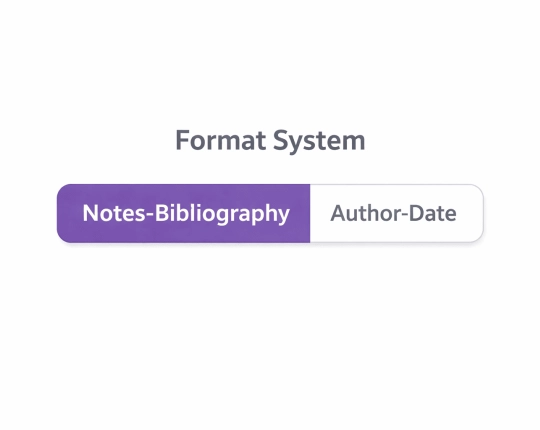
Notes-Bibliography
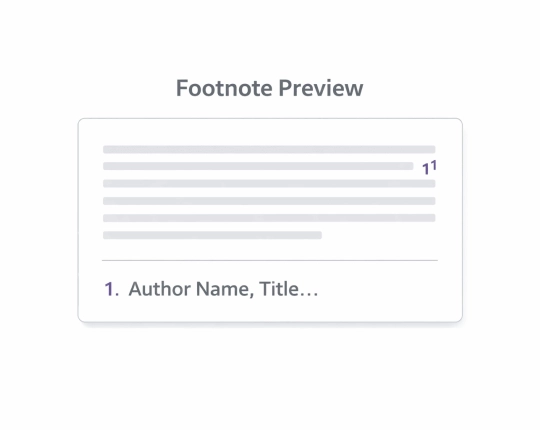
This system uses a note number in the text, then a footnote or endnote with full citation information. A bibliography appears at the end. Repeat references use a short form.
Author-Date
This system uses author plus year in parentheses in the text, then a reference list with full details. It fits many science and social science papers.

Types of Texts that Commonly Use Turabian Citation Style
Turabian style shows up a lot in school and university papers where sources need clear tracking. Students often use it in research papers and term assignments. Notes and author-date citations make it easier to keep track of sources that appear more than once.
However, big projects (thesis, dissertations, etc.) rely on it too. Chapters move around, sources repeat, but the notes and bibliography stay in line. History and literature papers use it often because footnotes let readers see the full source without stopping the story.
Some philosophy and theology assignments call for Turabian as well. Classic texts and commentaries require careful citation, and the style keeps details clear. Even essays for conferences or early publications adopt it because it matches Chicago style but stays practical for students.
How to Keep Turabian Rules Consistent: Our Checklist
- Start With One Strong Identifier. Pick a DOI, ISBN, or a direct link. Next, confirm author, title, and publication year, so the record matches the exact source.
- Save One Source, Reuse One Source. Keep one saved record per source. Reuse it each time the same source appears.
- Pick One System and Hold It. Notes-bibliography uses notes plus a bibliography. Author-date uses parenthetical in text citations plus a reference list. Pick one system and keep it across the full paper.
- Use Short Forms After the First Note. Full note first. Short note later. Keep author plus short title plus page for repeat notes, so the reader finds the source fast.
- Copy, Then Check Key Fields. Scan author names, title, publisher, year, and page. For web sources, check site owner name and the link.
Who Gains the Most From a Turabian Citation Generator
Students With Research Papers, Theses, and Dissertations
Long projects mean many sources and many repeat cites. A generator keeps the note set and bibliography stable as chapters shift.
Humanities Writers
History and literature courses often use notes, so footnotes and short forms matter on many pages.
Social Sciences Writers
Courses that prefer author-date benefit from fast parenthetical cites plus a clean reference list at the end.
Anyone Who Cites Many Web Pages
Web pages often hide author names or dates. A generator helps keep a clear organisation author and a stable link, so readers can reach the same page later.

Turabian References for Common Sources
Before final copy, scan each source type once. One missing field can break the note, the bibliography, or the reference list.
| Source type | What to check |
| Journal articles | Author, article title, journal title, year, volume, issue, page range, DOI or link. |
| Books | Author, title, edition, place, publisher, year. |
| Book chapters | Chapter author and title, book title, editor, publisher, year, chapter pages. |
| Websites | Person author or organisation, page title, site name (if useful), date shown on the page, link; add access date when required by a local guide. |
| Reports and standards | Issuing body, report or standard number, title, year, stable link. |
| Interviews and personal material | Name, role, date, format; keep details that explain access and context. |

Common Turabian Mistakes and How to Fix Them
In this table, we’ll see how to fix typical mistakes that students and researchers are caught in when using the Turabian style. Also, we provide a simple example for each of them.
| Common mistake | Quick fix | Quick example |
| New full note each time the same source appears | Use a short form for subsequent citations | Author, Short Title , 45. |
| Bibliography order drifts | Sort bibliography by author surname (or title when no author) | “Title …” under T |
| Note has no page for a quote | Add the page after the title | …, 112. |
| Website entry has no clear author line | Use organisation as author | World Health Organization. “Page …” |
| Author-date cite has year mismatch | Match the year in text and list | (Smith 2019) ↔ Smith. 2019. |
Explore More Citation Styles



 Unlimited AI homework help

 Diagram Generator, Flashcard Maker, Notes Generator, Research Assistant, Answer Generator, AI Homework Helper & AI Detector