


Artificial intelligence is no longer a novelty for students. It’s part of their routine. It shows up when an essay...

Best AI Tools for Essays: A Comprehensive Guide for Students and Researchers
In the past couple of years, AI tools like Edubrain have become essential for students, researchers, content creators, and professionals across various fields. These platforms go beyond basic text generation, assisting users in structuring ideas, overcoming writer’s block, drafting well-structured essays, refining prose, conducting research, checking grammar, and ultimately producing high-quality essays and academic papers. An AI essay writer now goes through the entire essay writing process, from brainstorming to final submission.
Contemporary AI writing tools integrate natural language generation with intelligent editing, customizable features, contextual understanding, and are even capable of providing research support. Such tools enable writers to produce work that is clear, consistent, and academically relevant, irrespective of whether they are writing a brief reflective essay or a comprehensive research paper with citations and detailed arguments.
This guide looks at 12 leading AI essay writing tools, showing their main features, the best scenarios for their use, and the ways they can help write tasks in less time.
Table of Content
ToggleBenefits of Using AI Tools for Essays
AI writing tools offer a wide range of benefits to students and academic researchers, especially when they are used for the preparation of essays and academic papers. Such devices turn the entire writing process into something very simple; they help in saving time, and they are also instrumental in the quality of the end product being of a high standard. There are lots of advantages but here are the chief ones:
- Overcoming Writer’s Block
Writer’s block is a common problem for students, but AI tools make it easier to get started. They offer prompts, generate ideas, and even provide full paragraphs. This helps students quickly move past the blank page and start writing. With this boost, productivity increases, and confidence grows. - Improving Writing Quality
AI tools do not just fix grammar errors. They also help with clarity, structure, and tone. Such tools enable students to gather their ideas and make their arguments stronger. The final product is a piece of writing that is not only clear and logical but also of the required academic standard and thus easy to be understood by anyone. - Saving Time
AI tools are the ones to do repetitive tasks like grammar checking, outlining, and content structuring. That is why students get more time to do research, analysis, and idea development. AI tools, by which time-consuming tasks are automated, have made writing not only faster but also of the same quality.
Best Practices When You Use AI to Write Essays
AI tools are incredibly helpful, but it’s essential to use them the right way. Here are a few tips to make sure you’re getting the most out of these tools while staying ethical.
- Use AI as a Helper, Not a Replacement
AI tools should support your ideas, not replace them. Use them to assist with structure, grammar, and content generation, but keep your unique insights in the essay. This ensures that the work remains your own. - Review and Revise
AI can create content a small amount of time, but it is still required to check and polish the content. Remember to work on the flow, correct any awkward expressions, and make sure that the content matches your point of view. The editing stage is indispensable if you want to maintain your writing style and the originality of your thoughts. - Humanize AI-Generated Text
While AI can generate content quickly, it often lacks the natural flow and human-like qualities needed for academic writing. To improve this, you can humanize AI text to make your essay sound more natural and less mechanical. - Be Honest About AI Use
A lot of schools have specific guidelines for using AI in academic papers. It’s important to know and follow these rules. If you use AI, be transparent. This way, your work aligns with the standards of academic integrity.
Now, Let’s Find Out What are the Best 12 Tools for Essays Available Today
1. Jasper AI – Comprehensive Essay and Content Generation
Jasper AI remains one of the most versatile AI content generators available. It supports writing tasks ranging from academic essays and research outlines to business reports and creative writing.
Overview and Strengths
Jasper excels at producing long-form content fluently. With customizable prompts and tone controls, it helps users generate structured drafts, develop ideas, and build consistent arguments. Its intuitive workflow allows writers to go from concept to draft in just a few clicks, making it ideal for students balancing multiple assignments.
It integrates AI understanding with contextual editing, helping shape paragraphs so they feel coherent, logical, and aligned with academic standards. Users can refine sections iteratively, adding references and examples to reinforce clarity.
Best for:
- College and graduate-level essay writing
- Research papers with extended exposition
- Reports which need a well-organized, multi-sectioned structure
Why it matters: Jasper’s combination of creativity and structure gives users a head start on writing tasks and reduces the time spent on organization and flow.

2. Writesonic – Flexible and Creative
Writesonic is definitely another leading AI writing tool that makes the process of writing an essay less complicated. This tool is perfect for a fast generation of a rough draft, thus it is extremely beneficial for a student who just needs to start his/her essay and then can continue to finalize it in a few clicks only.
Core Features
This tool offers various prompts and templates for different essay types like argumentative, descriptive, and comparative essays. Writers have an option to pick the prompts that suit their writing requirements, which allows the tool to create the outlines, the first paragraphs, and the theme-related sentences. This is a great way for users to swiftly move from having no idea to a draft that can be further worked on.
Writesonic also supports content optimization and editing suggestions, enabling users to refine tone or improve flow before moving to deeper revision.
Best for:
- Students having difficulty with essay writing
- Writers who want a quick first draft
- Non-academic writing that needs creative prompts
Why it matters:
Writesonic helps to shape raw ideas and gives you the idea of the generation, thus it is a great tool for reducing the mental load that goes hand in hand with the planning and organization phases of the work which are mostly your time and energy consuming. It is to mention that this is very helpful in the case of writers block.

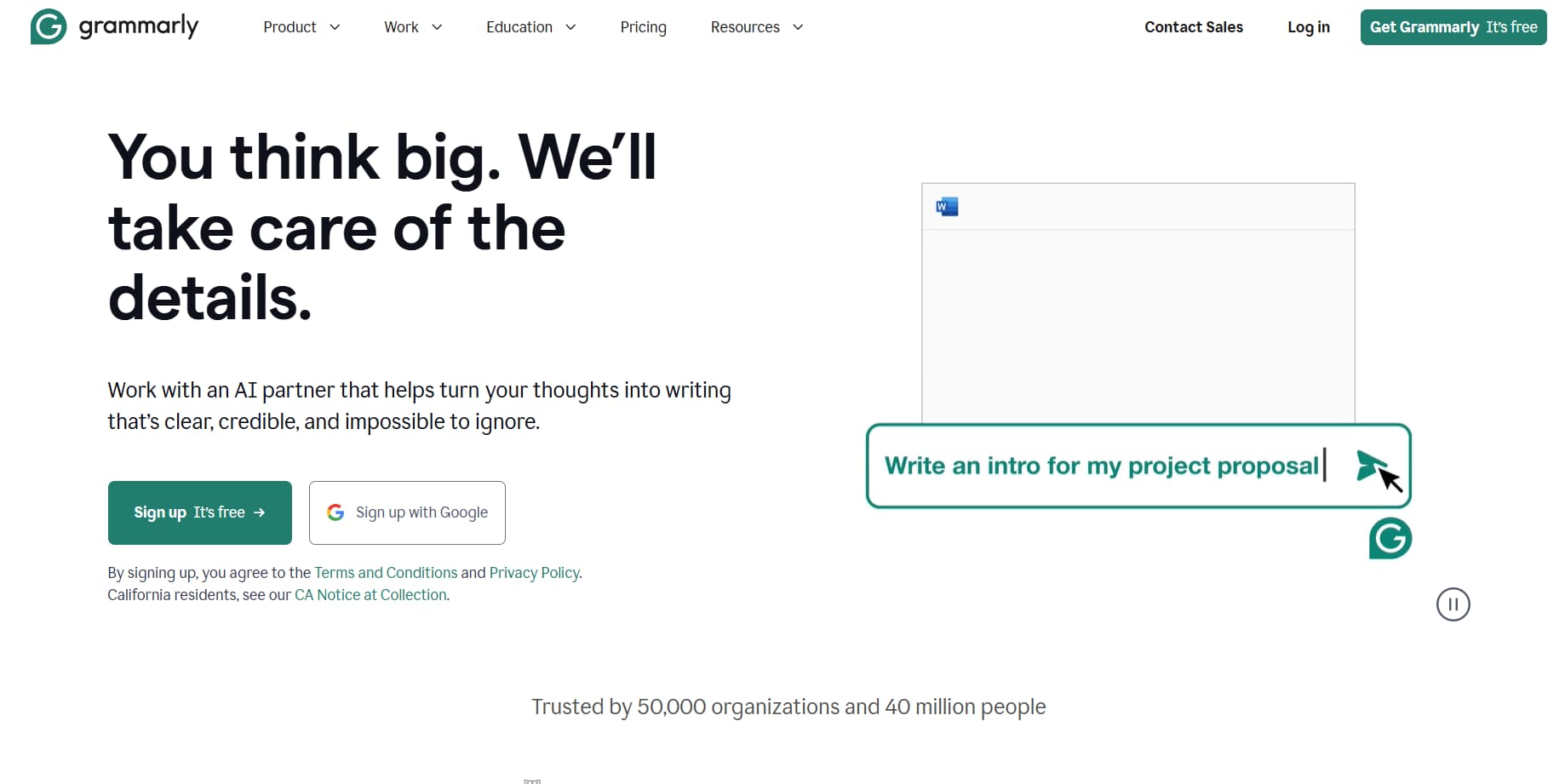
3. GrammarlyGO – Smart Editor and Style Refiner
GrammarlyGO is an advanced AI writing assistant whose main features are clear, precise, and grammatically correct writing. This is a perfect tool for students that have already written their papers and just want to refine them. The main pillars of GrammarlyGO are the tone, grammar, sentence structure, and overall writing quality, by which the tool helps students to be able to comply with the requirements of high academic standards.
Core Benefits
- Comprehensive grammar check and spelling correction
- Advanced tone detection to align writing with academic writing standards
- Sentence reordering and clarity suggestions
- Plagiarism detection and real-time feedback
Best for:
- Polishing final versions of academic essays
- Improving readability and flow
- Ensuring academic integrity
Why it matters:
GrammarlyGO acts like a virtual proofreader, offering suggestions that help writers elevate their prose to meet academic and professional expectations. Its ability to detect subtle stylistic issues makes it invaluable for final revisions.

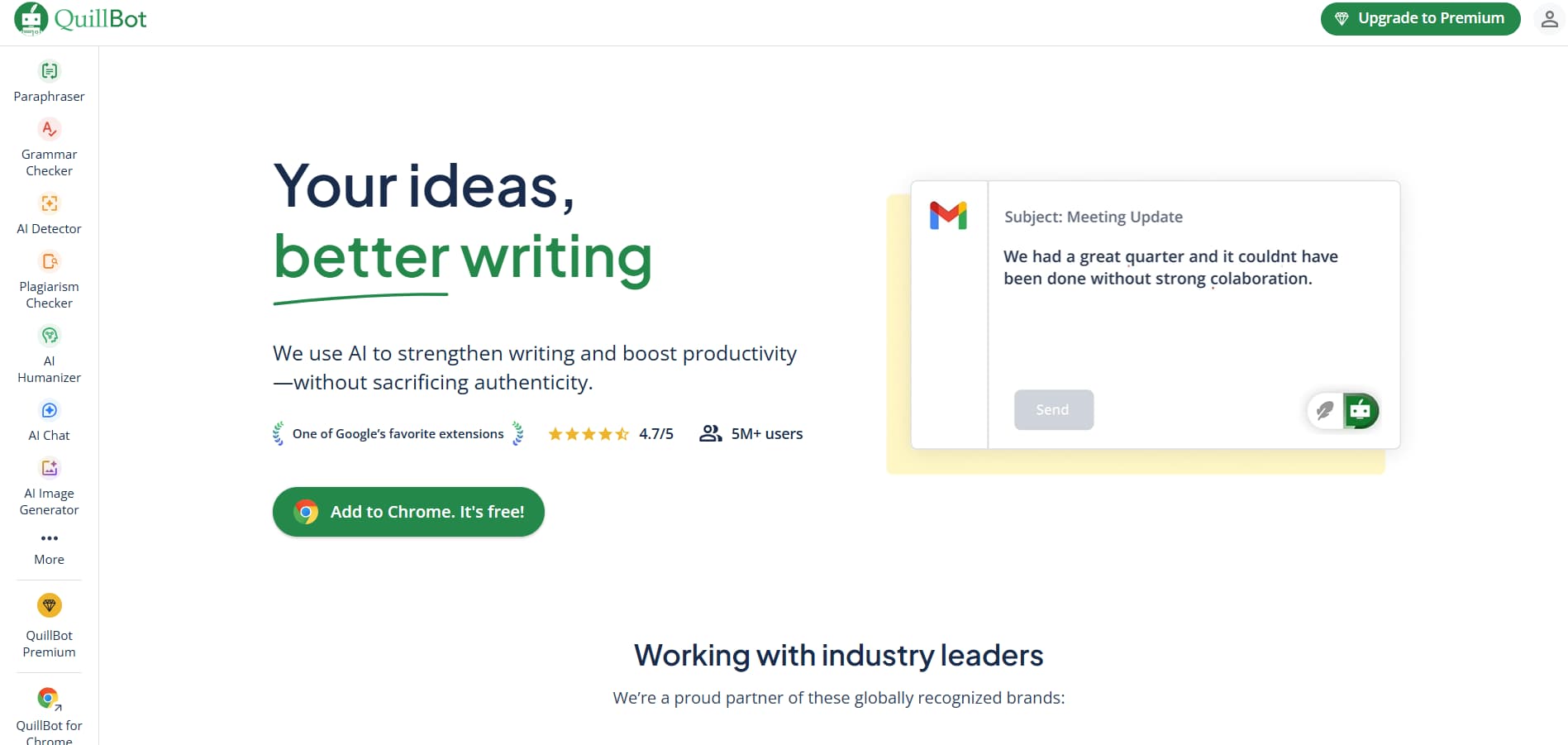
4. QuillBot – Paraphrase and Enhance Clarity
QuillBot is a tool that mainly focuses on paraphrasing and rewriting. One of its greatest uses is in scholarly writing where exactness and clear are of high importance.
Key Advantages
- Multiple paraphrasing modes to adjust tone and complexity
- Grammar and syntax checks
- Sentence structure optimization
- Supports integration with writing environments
Best for:
- Rephrasing awkward sentences
- Improving writing style and clarity
- Avoiding repetitive phrasing across long essays
Why it matters:
Paraphrasing can be very helpful when you need to include research results or change the structure of a local critique and still keep your academic prose original.

5. Sudowrite – Narrative and Creative Support
Sudowrite is a creative AI writing tool that excels at generating expressive prose, descriptive language, and narrative elements.
Highlights
- Supports imaginative elaboration and stylistic flair
- Generates metaphors, transitions, and scene descriptions
- Helps writers produce narrative flow and depth
While chiefly designed for fiction and creative narratives, Sudowrite’s ability to enrich prose can be helpful in reflective essays or sections of research papers requiring engaging exposition.
Best for:
- Narrative essays
- Humanities assignments
- Creative-based academic writing
Why it matters:
Even in analytical academic contexts, narrative clarity enhances readability. Sudowrite’s tools can help writers balance rigorous argument with engaging phrasing.

6. ProWritingAid – Advanced Analytics
ProWritingAid provides detailed feedback that goes beyond simple grammar and punctuation corrections. It’s designed to help writers analyze their work from multiple perspectives, improving academic writing and essays by focusing on structure, style, and cohesion.
Core Capabilities
- Detects repetition and wordiness
- Provides detailed reports on pacing and tone
- Identifies opportunities for clarity improvements
- Integrates with major text editors
Best for:
- Long-form academic writing
- Advanced stylistic refinement
- Writers seeking detailed analytics
Why it matters:
ProWritingAid empowers users to revise proactively rather than reactively, improving writing at the level of structure and overall expression.

7. Hemingway Editor – Readability and Precision Focus
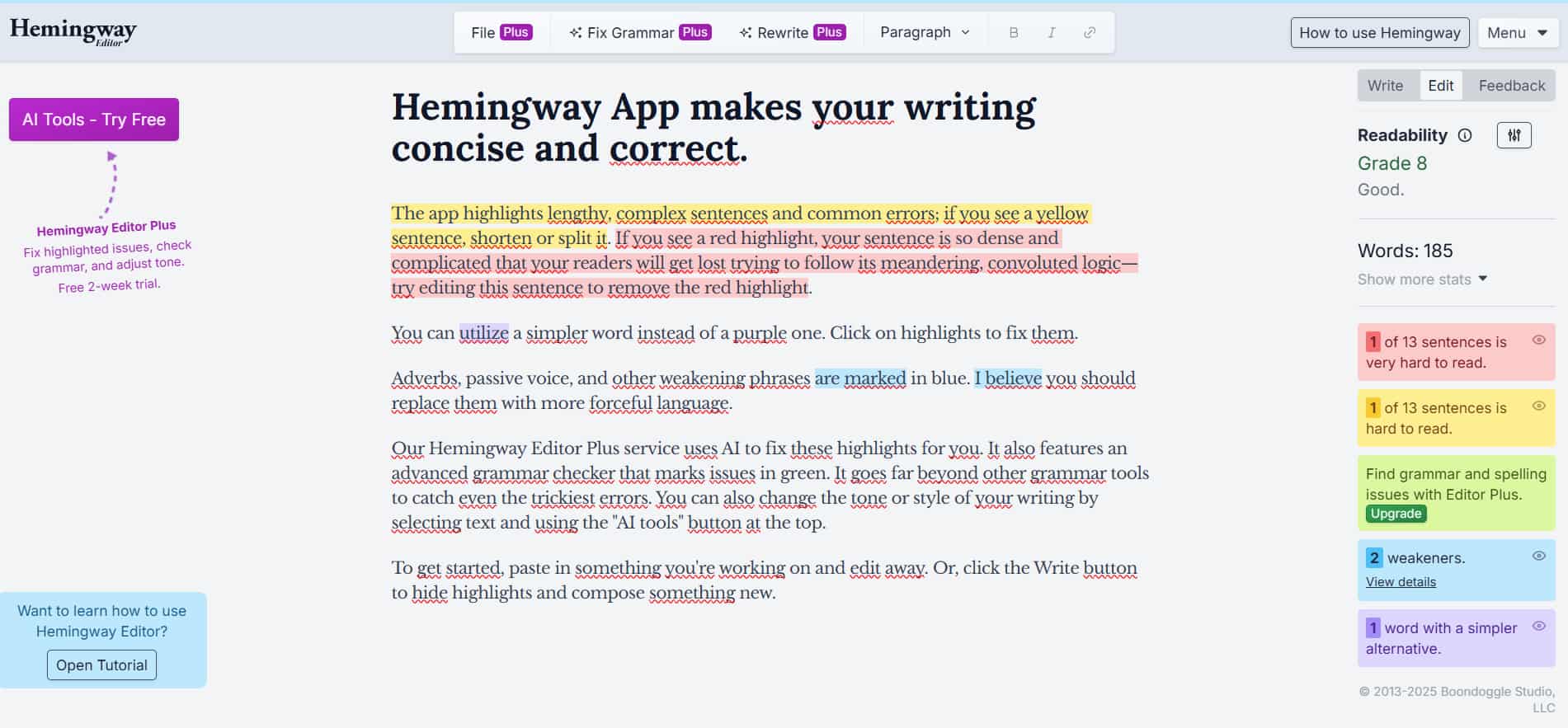
Hemingway Editor focuses on making writing clear and simple by pointing out complicated sentences and giving readability scores.
Unique Strengths
- Highlights dense, complex sentence structures
- Encourages more direct and transparent writing
- Provides readability metrics
Best for:
- Enhancing clarity
- Refining sentence structure
- Teaching concise academic expression
Why it matters:
Clear, accessible writing often scores better in academic contexts and improves overall reader engagement.

8. Frase.io – Research-Driven Support
Frase.io blends AI research assistance with writing capabilities, making it a unique tool for students who need to back up their essays with solid research. It also helps structure content based on the most relevant and recent research findings.
Key Features
- AI research assistant for gathering relevant sources
- Context-aware content suggestions
- Outline generation based on research data
Best for:
- Writing research papers, academic essays, and literature reviews with strong evidence-based support.
Why it matters:
Frase.io removes much of the grunt work associated with research, allowing users to focus on synthesis and argument rather than data collection.

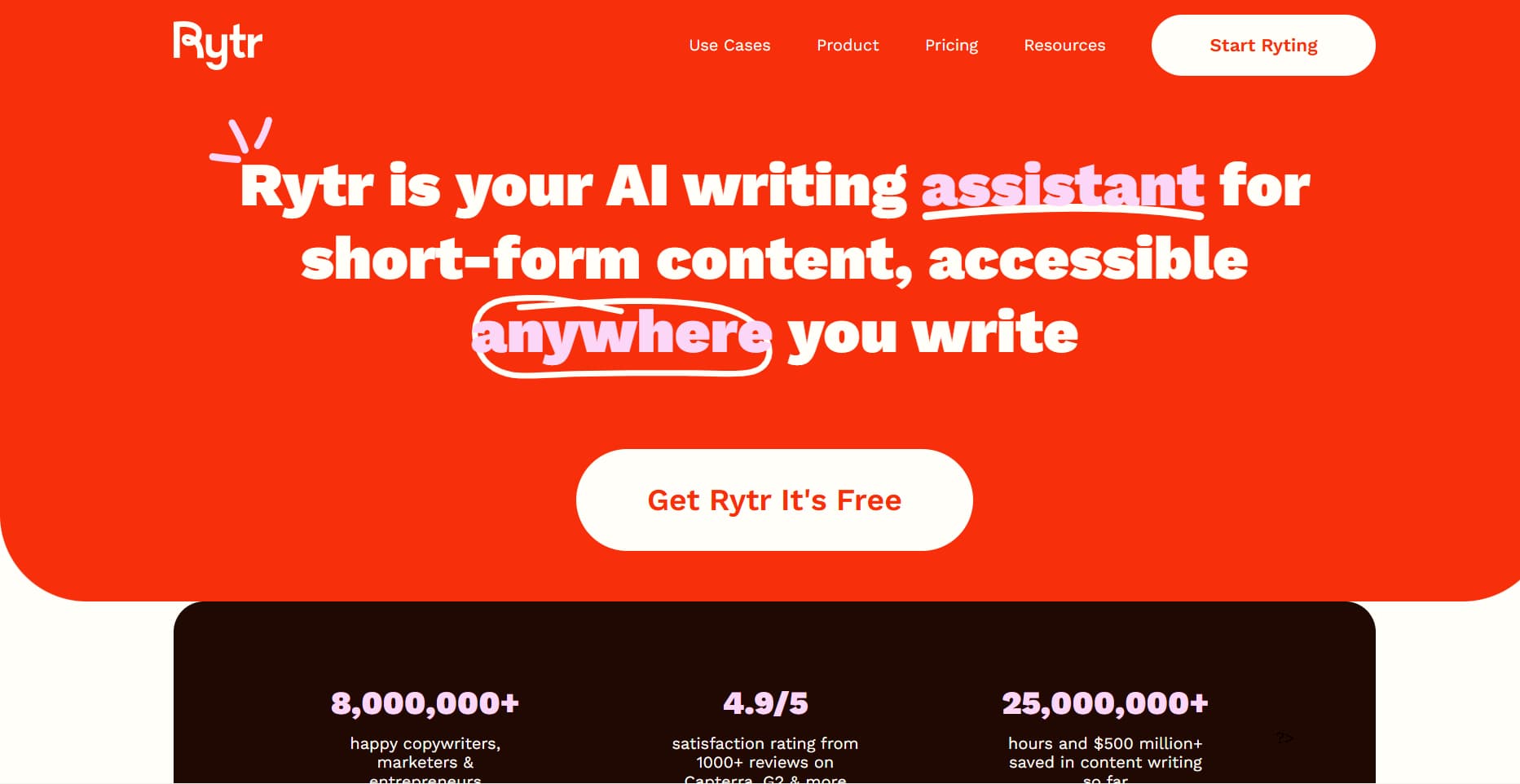
9. Rytr – Quick and Affordable AI Essay Generator
Rytr is a straightforward AI text generator ideal for students who need to quickly generate essays and assignments. With its simple interface and cost-effective pricing, it’s ideal for students on a budget.
Highlights
- Multiple templates for different essay types
- Customizable tone and style to suit academic needs
- Affordable pricing with a free plan available
Best for:
- Writing essay-based content quickly and efficiently
Why it matters:
Rytr is often a good starting point, enabling writers to transform ideas into structured text quickly.

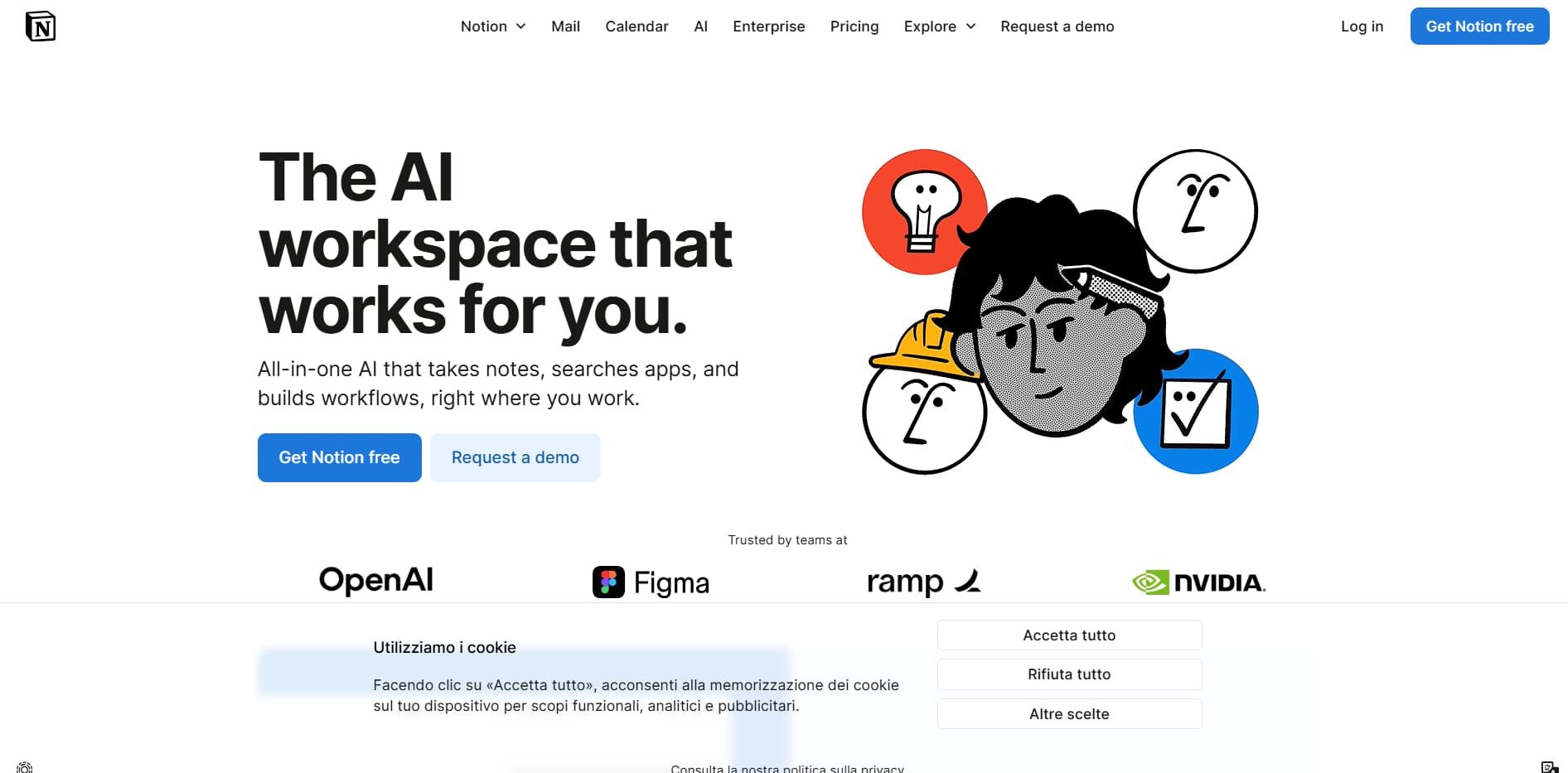
10. Notion AI – Integrated Writing and Organisation
Notion AI integrates AI into a workspace that combines notes, references, and draft writing. Students benefit from having research, writing, and revision visible within a single interface, encouraging continuous refinement and contextual organization.
Strengths
- Unified workspace for notes, including citation links and draft versions
- AI assistant for summarizing, drafting, and outlining
- Supports collaboration on group projects
Best for:
- Organizing essays, research, and collaborative writing tasks
Why it matters:
By keeping research and writing together, this tool reduces friction and improves workflow efficiency.

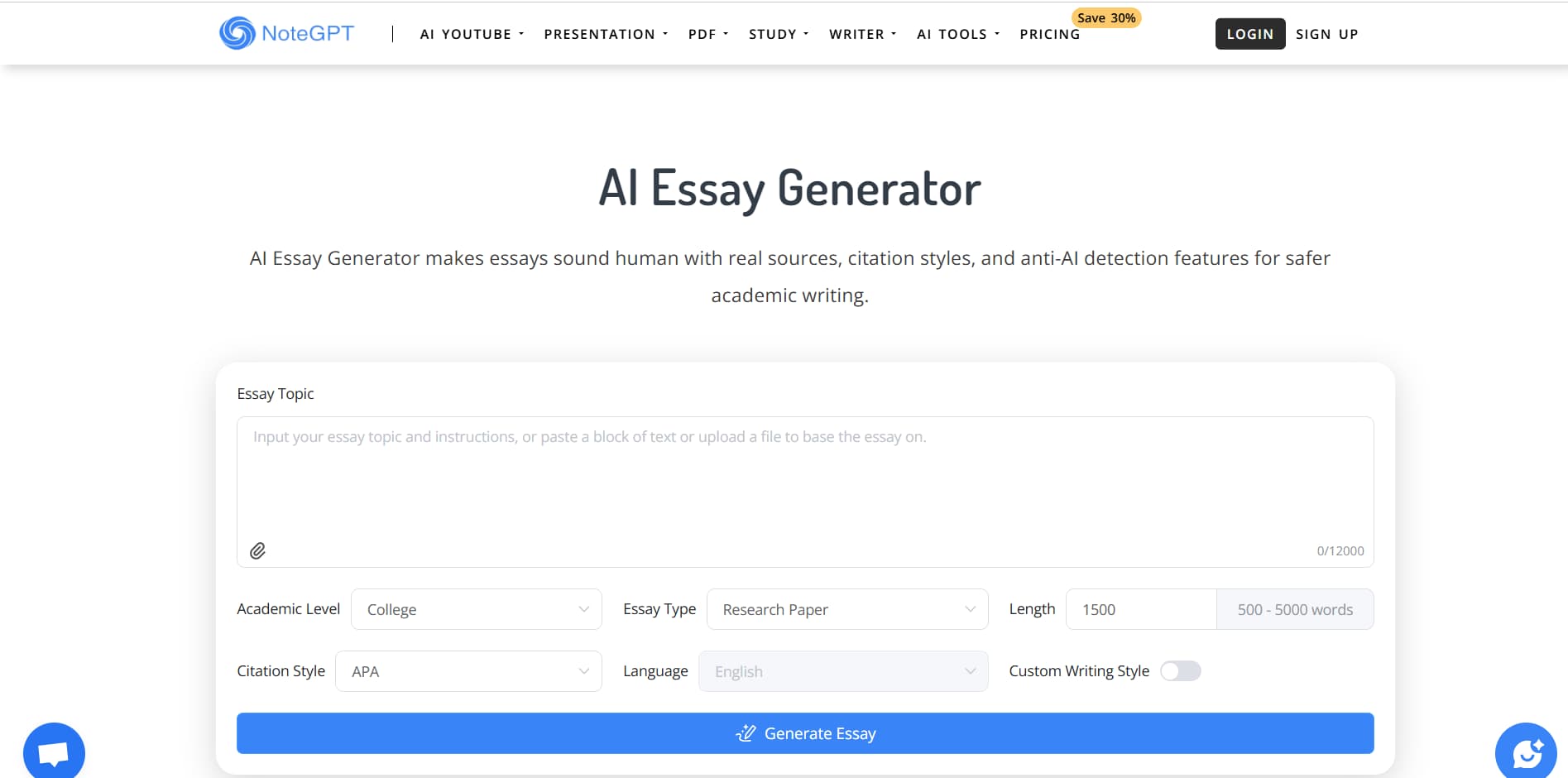
11. NoteGPT – AI Essay Generator with Research and Structure Support
NoteGPT offers a suite of tools for supporting essay writing and academic writing with functions that go beyond simple text generation. It includes an essay generator, summarization tools, outlining, and support for organizing academic content clearly and coherently.
Why it’s useful:
NoteGPT generates full essays with introduction, body, and conclusion, organized with a well-defined structure and including citations formatted correctly, often necessary for academic work. The generator also builds references and sources, reducing the time spent on manual research.
Key Features:
- Full essay generation from title or notes input
- Automatic structure with introduction, body, and conclusion
- Research-based content generation and citation formatting
Best for:
Students needing a generator with built-in research support and an already ready structure for academic essays.

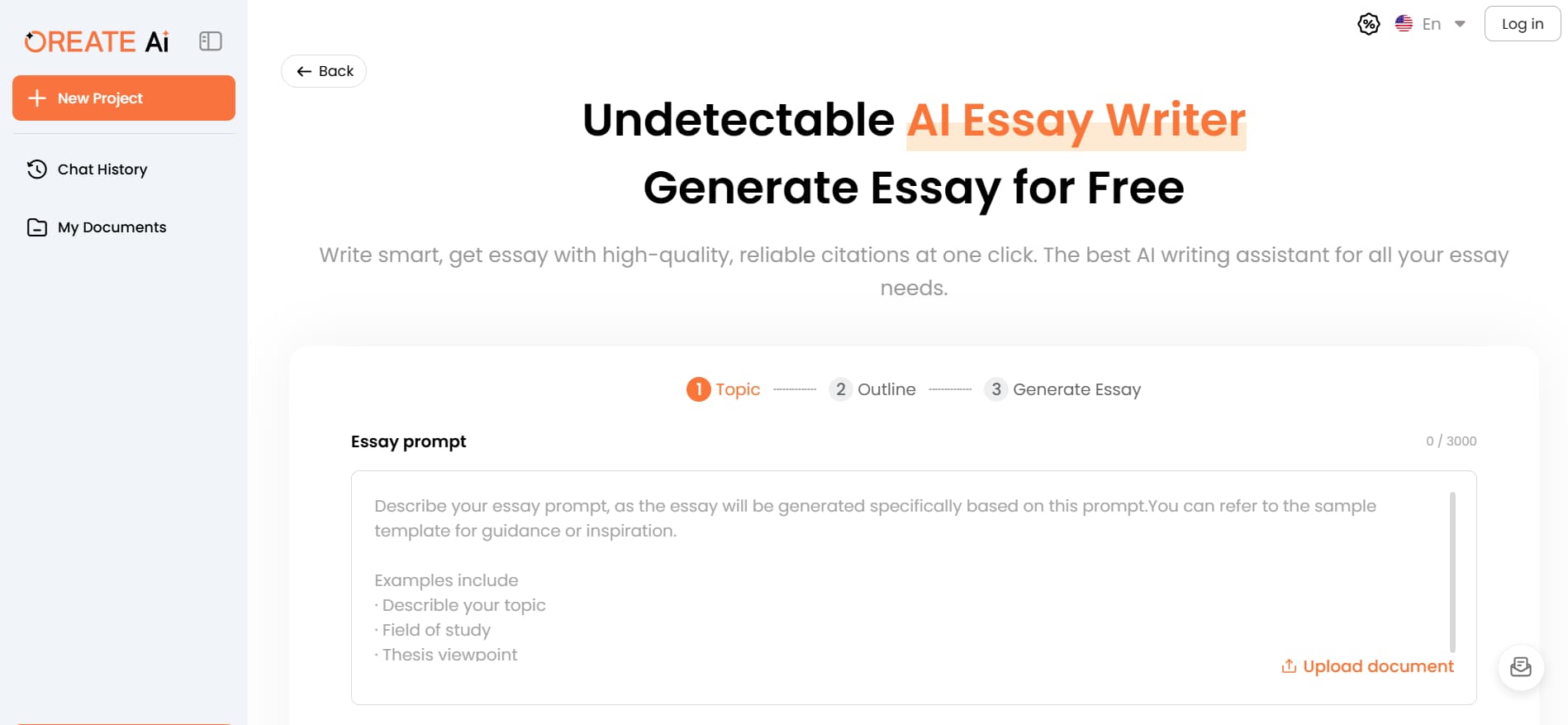
12. Oreate AI – Essay Writer with Reliable Citations
Oreate AI is an AI essay writer solution designed to simplify academic essay writing on a large scale, including works up to 20,000 words. Its AI engine provides structured content with reliable citations from credible sources, formatted correctly for academic purposes.
Why it’s useful:
Unlike many generators that produce text without context, Oreate AI focuses on linking content to real sources, making it ideal for academic papers and theses that require evidence and formal referencing.
Key Features:
- Generation of long-form essays with well-structured essays
- Built-in citation management and plagiarism-free content
- Document upload for generating outlines or refining existing drafts
Best for:
Those needing a robust AI essay maker focused on quality sources and structured argumentation.

Conclusion: Choose the Right AI Tool for Your Needs
The best AI writing tools for you will depend on your specific writing needs. Students working on academic essays, research papers, or creative projects can choose tools that help streamline the writing process and produce polished content.
For deep research tasks, tools like Frase.io or Yomu AI provide strong foundations. For drafting and polishing, Jasper AI, Writesonic, and Notion AI offer great flexibility. Meanwhile, tools like GrammarlyGO and Hemingway Editor are essential for refining writing style and ensuring clarity. After that, you can use a reliable AI checker to confirm originality and ensure the text meets academic standards.
Whether you are struggling with writer’s block, looking to improve your writing skills, or aiming to produce a well-structured essay, there’s an AI tool to suit your needs. By integrating these tools into your writing process, you can save time, reduce errors, and ultimately produce better academic work.
FAQ
- Are AI tools allowed for essay writing in academic settings?
Policies vary, but many institutions allow use for drafting and editing. - Can AI tools generate plagiarism‑free essays?
Many platforms include plagiarism checks, but manual review is still important. - Which tool is best for research papers?
Tools like Frase.io and Yomu AI shine with research support and document completion. - Can these tools enhance writing skills over time?
When used as an aid for practice and revision, they reinforce structure and argumentation skills.
Latest Articles
If you have ever tried to make an impactful PowerPoint presentation, you know it is not an easy task. There...
Many students say math is the subject they fear the most. Not because they never understood numbers, but because at...