
AI assistants now play a regular role in work and study. Many people use generative AI for writing emails, doing...

Is ChatGPT the Best AI Model for Education? Detailed Comparison
AI has become a staple in classrooms, lecture halls, and dorm rooms. While many students and educators default to ChatGPT for everything from drafting essays to planning syllabi, the real question is simple: is it actually the best tool for academia, or have specialized competitors surpassed it? Here, I break down how ChatGPT stacks up against the wider landscape of AI tools like ours in an educational setting.
I will examine where it excels, such as simplifying complex topics and acting as a sounding board, and where it falls short compared to tools like Google Gemini, Microsoft Copilot, and Perplexity. Whether you are a professor building a grading rubric or a Master’s student analyzing a dense management case study, this breakdown will help you choose the right AI assistant for your academic workflow.

Table of Content
ToggleKey Takeaways
- ChatGPT is exceptional for brainstorming, overcoming writer’s block, and explaining difficult concepts like a personalized tutor.
- AI tools save educators hours by generating lesson plan outlines, practice quizzes, and administrative templates.
- AI hallucination (making up facts or fake citations) remains a critical risk; human fact-checking and critical thinking are non-negotiable.
- Different models serve different academic needs: some excel at creative brainstorming, while others are built for rigorous, cited research.
- The goal of AI in education is to augment the learning process, not bypass it entirely.
Key Elements of Successful Academic Work and Teaching
Whether grading a stack of papers or researching a final thesis, clarity, accuracy, and structure are paramount. Professors look for original critical analysis, not just regurgitated facts. For educators, delivering clear, engaging materials is essential for student success. Here is where AI fits into the educational ecosystem without crossing the line into academic dishonesty.
| Academic Task | What is Required for Success | How AI Can Help |
| Researching | Credible, peer-reviewed sources and accurate data | Summarizes long texts and helps identify key themes |
| Essay Outlining | Logical flow, strong thesis, and structured arguments | Brainstorms structural frameworks and debates potential counter-arguments |
| Studying | Active recall and understanding of core concepts | Acts as a Socratic tutor, generating flashcards and practice quizzes |
| Lesson Planning | Engaging activities aligned with curriculum standards | Drafts initial syllabus structures, project ideas, and discussion questions |
| Proofreading | Clear grammar, proper academic tone, and correct formatting | Flags passive voice, run-on sentences, and awkward phrasing |
Academic integrity is the most important factor. AI should be treated as a study buddy or a teaching assistant. It can help you organize a chaotic week of assignments or generate a rubric for a new course in seconds, but the original thought leadership must always come from the human behind the screen.
ChatGPT: The General-Purpose Academic Assistant
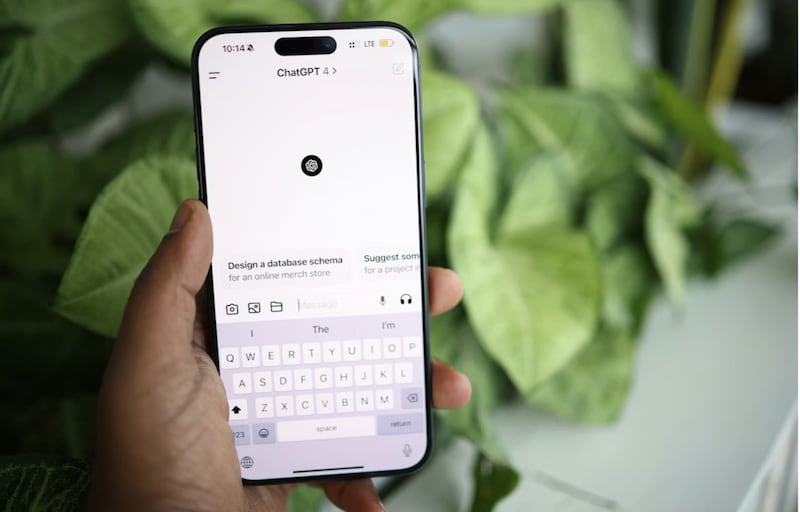
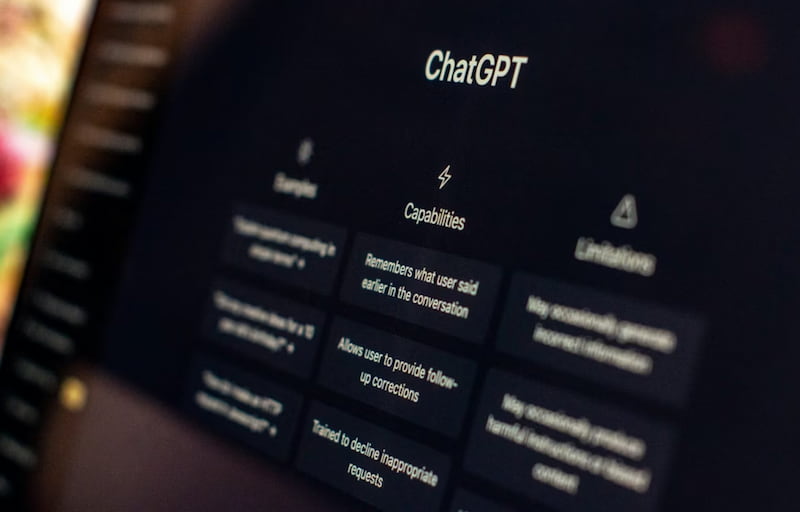
ChatGPT remains incredibly efficient for structural and foundational academic tasks. It has the power to act as a tireless tutor—if a student is struggling with a complex statistical concept or a dense philosophical text, ChatGPT can rewrite the explanation at various reading levels until it clicks. For teachers, it is a massive time-saver for generating classroom activities, formatting emails to parents, or brainstorming project-based learning modules.
A major strength of ChatGPT is its conversational flexibility. It can engage in role-play (e.g., “Act as a debate opponent arguing against my thesis”) which helps students strengthen their arguments before writing. However, it is not a dedicated research database. While it provides a great head start on understanding a topic conceptually, users must be cautious of its tendency to invent academic sources if not carefully prompted.
Comparison of Top AI Chatbots for Education

While ChatGPT is the most famous general-purpose tool, this year has brought specialized competitors that excel in distinct areas of the academic lifecycle. Here is how they compare for students and educators.
Edubrain
Unlike general-purpose models, Edubrain is a dedicated educational AI designed specifically as a homework helper and study companion. We stands out for our extreme accessibility, requiring no sign-up for our core features, and our focus on step-by-step problem-solving. Edubrain is particularly strong for STEM students; users can upload photos of complex math or physics equations and receive logically broken-down explanations rather than just a final answer. With built-in tools like an AI flashcard maker, notes generator, and an AI detector, it is highly tailored for students seeking targeted academic support without the distractions of enterprise chatbots.
Google Gemini
Gemini is deeply integrated into Google Workspace, making it a natural fit for schools relying on Google Classroom, Docs, and Drive. Its standout feature for higher education is its massive context window. A student can upload an entire semester’s worth of syllabus PDFs, slide decks, and reading materials, and ask Gemini to synthesize a comprehensive study guide or locate a specific theory buried in the texts.
Microsoft Copilot
Copilot is the undisputed choice for universities and school districts heavily invested in the Microsoft 365 ecosystem. Because of its enterprise-grade data protection, institutions are more comfortable adopting it. It shines when educators need to turn a Word document syllabus into a fully formatted PowerPoint presentation for the first day of class, handling the busywork seamlessly.
xAI Grok
For students in journalism, political science, or debate clubs, Grok offers a unique edge: real-time access to the X (formerly Twitter) data stream. It is highly effective for researching breaking news, analyzing real-time public sentiment, or exploring how a current event is unfolding across different global demographics.
Perplexity
Perplexity functions as an AI-powered academic search engine. When you need to write a research paper, Perplexity synthesizes information from across the web and provides strict, clickable citations for every claim. It is the best tool for finding actual peer-reviewed papers, fact-checking drafts, and ensuring that your research is grounded in reality rather than AI hallucinations.
Pros and Cons of Using AI Chatbots in Academia

AI has revolutionized how we study and teach, but the technology comes with significant academic guardrails that must be respected.
Pros
- 24/7 Tutoring: Students have access to instant explanations, formula breakdowns, and language practice at any time of night.
- Administrative Relief: Teachers can automate the creation of rubrics, permission slips, and baseline lesson plans, freeing up time for actual student interaction.
- Overcoming the Blank Page: AI is an excellent cure for writer’s block, providing immediate structural outlines to get the writing process started.
Cons
- Hallucinated Citations: Language models can confidently invent fake academic papers, authors, and statistics. Blindly trusting AI for research often leads to academic penalties.
- Loss of Original Voice: Over-reliance on AI can stunt a student’s ability to develop their own critical thinking skills and unique writing voice.
- Plagiarism Risks: Copy-pasting AI text without heavy editing or original input often triggers institutional AI detectors and violates academic honor codes.
Ways AI Chatbots Support the Educational Workflow
AI tools support far more than just writing essays. For students, ChatGPT can transform passive reading into active learning. You can paste a difficult chapter into the chat and ask the AI to generate a 10-question multiple-choice quiz to test your comprehension.
For educators, AI writers can differentiate instruction. If a teacher has a classroom with mixed reading levels, they can ask the AI to rewrite a historical text to a 6th-grade, 8th-grade, and 10th-grade reading level simultaneously, ensuring the content is accessible to everyone.
It also supports presentation prep and PowerPoint generation. Students defending a thesis or presenting a project can prompt the AI with their topic and ask it to generate the toughest questions a professor might ask, serving as a rigorous mock-audience.
AI Generation vs. Genuine Academic Effort
The true distinction lies in synthesis versus original critical thought. AI can quickly synthesize existing information, but it cannot produce entirely new academic theories or relate deeply to human experiences.
| Factor | AI Chatbots | Student/Teacher Effort |
| Speed | Near-instant generation of outlines and summaries | Slower, deliberate process of deep learning |
| Analysis | Summarizes what has already been said | Connects concepts to create new, original insights |
| Feedback | Provides fast, rules-based grammar and structural edits | Provides empathetic, context-aware mentorship |
| Best Use Case | Brainstorming, outlining, formatting, and practice | Critical thinking, final drafting, and complex problem solving |
The most successful students and teachers use a hybrid model. AI handles the rote memorization tools, structural frameworks, and formatting, while the human focuses on deep analysis, class engagement, and original argumentation.
Costs: Free Tiers vs. Premium AI Subscriptions
AI accessibility is a major benefit for education. The free tiers of ChatGPT, Claude, and Copilot are more than capable of handling everyday high school and undergraduate tasks like outlining essays, generating study guides, and explaining math formulas.
However, graduate students, researchers, and university faculty often benefit from upgrading to premium tiers (typically around $20/month). Paid versions offer access to more advanced reasoning models, larger context windows (essential for uploading long research PDFs), and priority access during midterms and finals when server traffic spikes. Many universities are also beginning to secure enterprise licenses, providing these premium features to their student bodies for free.
The Future of AI in Education
AI already dictates how modern students study and how teachers plan, and the technology is integrating deeper into the classroom. We are moving past the initial phase of “banning AI” toward an era of teaching “AI literacy.”
The future lies in hyper-personalized AI tutors that adapt to a student’s specific learning style over an entire semester. Imagine an AI that knows a student struggles with algebra but excels at visual learning, automatically adjusting its explanations to include more charts and real-world visual metaphors. For educators, the focus will shift from policing AI-generated text to designing assignments that require in-class application, oral defense, and highly personal reflections that AI cannot fake.
Final Thoughts: Is ChatGPT the Best AI for Education?

ChatGPT remains one of the most versatile and accessible tools for general academic assistance. It is an unparalleled study buddy, brainstorming partner, and administrative assistant for educators.
However, depending on the academic rigor required, it may not be the only tool you need. If your work relies heavily on citations and peer-reviewed journals, Perplexity is the superior choice. If you are drowning in PDFs and slide decks, Google Gemini’s document analysis is unmatched. Ultimately, the best approach is to use AI to augment your workflow, ensuring that the final essays, lesson plans, and research projects remain a product of your own critical thinking and hard work.
Explore Similar Topics
Homework has been a cornerstone of education for generations. It has sparked endless debates among educators, parents, and students. Some...
Artificial intelligence (AI) is transforming educational technology. This change is particularly notable in mathematics. Traditional teaching methods now integrate with...