
Sociology and psychology are fields that study human behavior but from entirely different angles. In academic circles, sociology and psychology...

Differences and Similarities Between Anthropology vs Sociology
Anthropology and sociology are two key fields in the social sciences that help us understand society and the study of human beings. Both of these two fields analyze human behavior, though in contrasting ways. An anthropology major focuses on culture and history, bringing a deep comparative perspective. In contrast, sociology focuses primarily on contemporary society. A sociologist studies data and facts to understand social dynamics.
This article compares majors in both areas in terms of emphasis, approach, and career opportunities. The contrasting perspectives from which each defines human existence set the two disciplines apart. While anthropologists and sociologists both aim to understand groups, anthropology generally has a broader historical scope than sociology.
Table of Content
ToggleWhat is Anthropology? Exploring the Discipline
Anthropology is the study of people and their societies, both past and present. It includes the study of human evolution and how different cultures change over time. Anthropologists study humans across four main subfields:
- Cultural Anthropology: Looks at people’s beliefs, social practices, and daily life. Cultural anthropologists show how cultural norms vary across regions.
- Archaeology: Studies physical remains like tools, pottery, and bones. It helps piece together life in historical civilizations, much like solving a puzzle.
- Biological Anthropology: Also known as physical anthropology, this branch focuses on human evolution. It examines fossils and primates to learn how humans adapted over time.
- Linguistic Anthropology: Analyzes language use in shaping social identity. It explores how language shapes our perspective.
Anthropology studies human life to discover what makes us unique. Anthropologists often study societies to find shared aspects of human life. Their findings reveal how groups of people live, enhancing our understanding of cultural diversity. The anatomy AI solver is a great resource for helping with complex anatomical structures.
What is Sociology?
Sociology studies how people interact in groups, how societies change, and why people behave the way they do in social settings. It examines all aspects of how people behave in groups, from how we act within our families to how whole societies change. Sociologists use various theories and methods to look at social structures and interactions. They might analyze anything from how people of different ages live together to how social movements rise and fall. Their tools help them see patterns and predict changes.
Main Focuses: Sociology’s main focus is understanding how and why societies function. Sociologists explore race, gender, and class. They examine how these factors affect people’s lives and social groups. This focus helps them understand the bigger picture of social life.
Sociology shows us the unseen forces that shape our actions and lives. Unlike anthropologists, who might focus more on cultural variations and human history, contemporary sociologists dig into how societies work today. They look at the roles and rules that organize our world. This understanding can help us make better decisions and understand others around us.
Sociology and Anthropology: The Study of Social Life
Anthropology began during the Age of Exploration. Sociology is the study of how people interact, how societies change, and why people behave the way they do. It examines how people interact with one another, looking at everything from the individual level to the way whole societies shift. Sociologists use diverse research methods and social theory to look at social structures.

Main Focuses: Sociology’s main focus is understanding how human societies function. A sociologist explores race and ethnicity, gender, social class, and social stratification. They examine how these factors affect social mobility and daily life.
Sociology often shows us the unseen forces that shape our actions. While anthropology often focuses more on cultural variations and history, contemporary sociologists dig into modern societies and current social structures through a strict sociological lens.
Anthropology vs: Historical Development
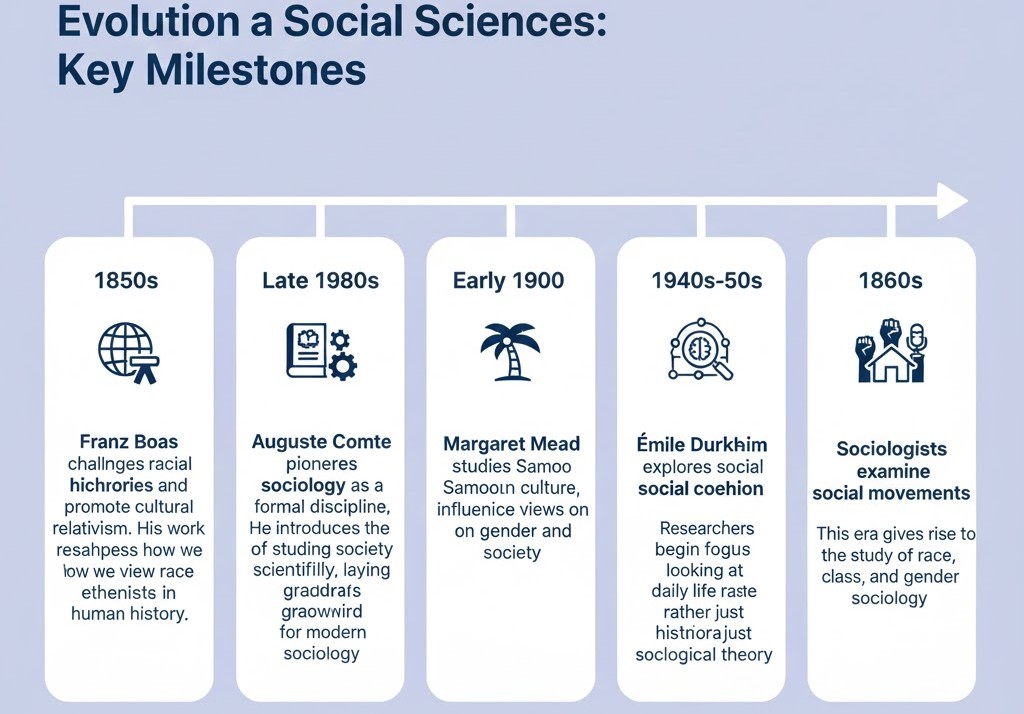
The discipline of anthropology began during the Age of Exploration as explorers documented different communities globally. By the 19th century, scholars conducted systematic studies. Early pioneers like Franz Boas challenged racial prejudices, highlighting the importance of fieldwork and ethnography. Later scholars like Clifford Geertz further influenced how we interpret culture.
Sociology started in the early 19th century as the Industrial Revolution changed society. Auguste Comte, the originator of the term, believed in the scientific study of societies. Émile Durkheim formally established sociology as an academic field. Later thinkers, including C. Wright Mills, popularized the “sociological imagination” to help people connect personal challenges to larger social issues.
Difference Between Anthropology and Sociology: Research Methods
What’s the difference regarding how these experts operate? Both aim to study human behavior, but they use different methods.
Anthropology’s Approach
Anthropologists often look to the past to inform the future. Their work usually involves qualitative research, specifically participant observation and extended fieldwork. Fieldwork means living among the people studied for months or years. Ethnography is about creating detailed descriptions of these cultures based on firsthand observations within a specific civilization.
Sociology vs Anthropology’s Approach
In contrast, sociology students and researchers focus on contemporary issues. Programs in sociology teach both qualitative and quantitative methods. A common tool is the survey, which collects specific information from groups. They then use statistical analysis to interpret this quantitative data, revealing trends within societies.
To sum up the difference between anthropology and sociology: anthropology examines human life throughout history, while sociologists may use quantitative tools to survey how social media affects modern families. While fields often overlap, bringing together qualitative and quantitative data, they maintain distinct core approaches.
| Attribute | Anthropology | Sociology |
| Time Focus | Past and present | Present |
| Methodologies | Fieldwork, Ethnography | Surveys, Statistical Analysis |
| Example Study | Living with a tribe in the Amazon | Surveying the effects of social media |
| Key Study Approach | Immersion in diverse cultures | Analysis of contemporary social issues |
Areas of Study: Sociology vs Anthropology
Sociology and anthropology cover human actions in different forms.
Anthropological Focus. Anthropology studies humans generally. Archaeologists dig up pots, biological anthropologists analyze bones, and cultural researchers reside in the communities they study. Famous anthropologists include Zora Neale Hurston, who gathered and preserved Southern U.S. folklore.
Sociological Focus. Sociology observes group behavior in modern times. It dissects how race, gender, and wealth affect the social life of humans. Patricia Hill Collins is a renowned sociologist who explored how identities are shaped by race and gender. Gustave Le Bon’s studies on crowds offer a timeless perspective on group dynamics.
However, both fields have produced influential figures whose work has profoundly affected human biology and our understanding of humanity.
- Zora Neale Hurston: As an anthropologist, she immersed herself in Southern U.S. cultures, gathering and preserving the local folklore.
- Patricia Hill Collins: A sociologist who has extensively explored how personal and social identities are shaped by race and gender, offering profound observations about African American women’s experiences.
- Gustave Le Bon: His studies on crowd behavior show how peaceful groups can suddenly turn chaotic, offering a timeless perspective on group dynamics.
Career Opportunities: Finding Work with a Sociology Degree or Anthropology Major
A degree in either of the two fields provides flexible career opportunities. Graduates learn to study the ways humans operate, building critical problem-solving skills.
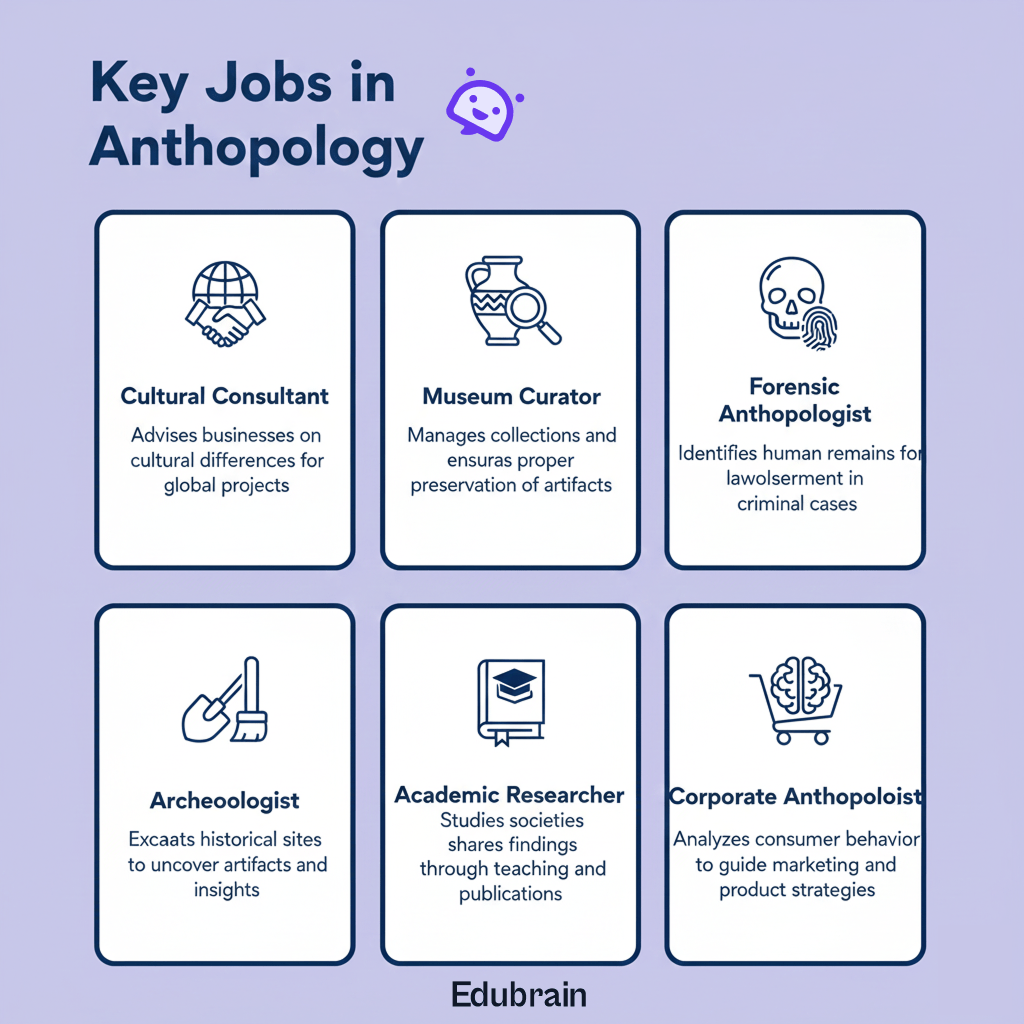
Anthropology Careers. Graduates find work far beyond academia. They work in corporate offices, the public sector, and nonprofits.
- Corporate Anthropologists: Earn around $62,000 per year conducting market research.
- Government Roles: Those who work in government earn around $55,000 evaluating public projects.

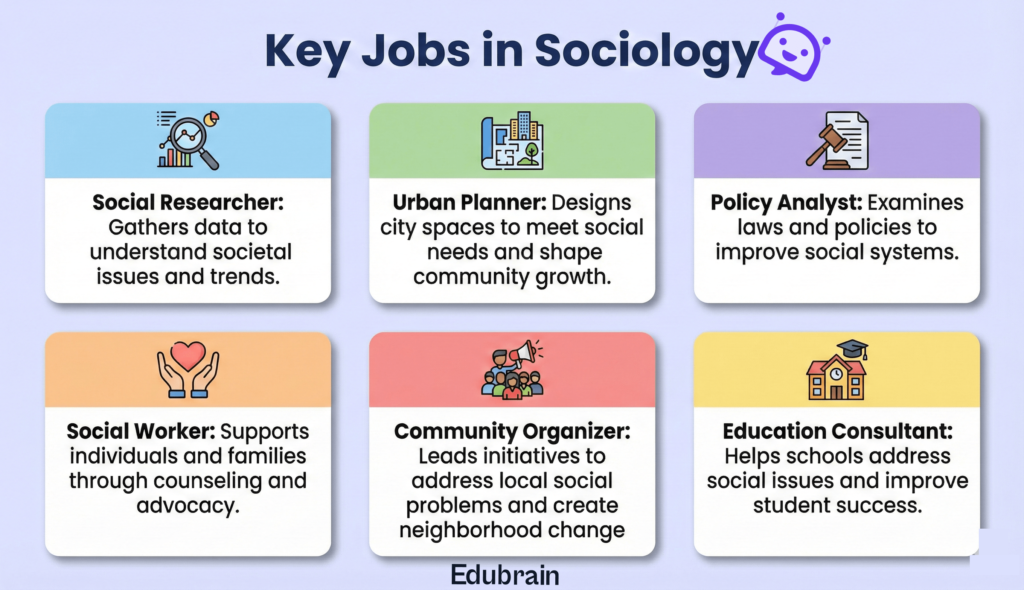
Sociology Careers. Students who major in sociology also have diverse options. A degree in sociology is highly versatile.
- Urban Planners: Shape community spaces (avg. $65,000/year).
- Social Workers/Counselors: Navigate life challenges ($40,000–$60,000/year).
- Consultants/Educators: Many find roles in various fields including education ($50,000–$70,000/year).

Many graduates in both fields pursue advanced degrees like PhDs, leading to specialized teaching or research roles. Whether you hold a sociology major or an anthropology major, the skills are invaluable. For students exploring broader social topics, a helper for political science can provide extra support. Whether working in business, education, or public service, a degree in anthropology or sociology offers flexible career paths with strong job potential.
Conclusion
Anthropology and sociology explore human behavior, but they do it differently. Anthropology studies cultures over time, often by researchers living with the people they study. Sociology looks at how today’s social setups influence our behavior, using surveys to find patterns.
If you are interested in human diversity and history, learning about both gives a fuller picture. Anthropology helps us see how cultures have changed globally. Sociology shows us current social patterns in the U.S. and beyond. By combining insights from both, we better understand why people act the way they do, knowledge that is vital for tackling today’s social issues.
Explore Similar Topics
Canada is one of the best places for any international student who wants to study in a safe and welcoming...
Behavioral psychology is the study of how the environment affects behavior. Often referred to simply as behaviorism, this field of...