Python is considered one of the most accessible choices for students. Learning Python is highly sought after as a programming...

JavaScript vs Java: Differences Between & Which Language Should You Learn?
Java and JavaScript share similar names, so many people assume they are related. After all, they share the word “Java.” But in reality, they are wholly unique. Because of their names, assuming they are connected is a common misunderstanding. Java is a completely separate programming language with its own purpose, while JavaScript was named partly as a marketing strategy.
If you’re a developer or just curious about coding, knowing how these two popular programming languages differ is important. Picking the correct language to learn for your project can make a huge difference. This guide will explore the differences, pros and cons, and help you decide which language should you learn.
Table of Content
ToggleWhat’s the Difference Between Java and JavaScript?
What’s the difference between Java and JavaScript? They serve two vastly different functions. They are both powerful tools, but each is designed with a different context in mind.
Java is a general-purpose, object-oriented programming language. Its largest application is building big apps. It is a highly desirable programming language that is typically used in enterprise software, back-end development, and designing Android apps. Most bank and finance systems are developed on Java because it is stable and expandable. Java has been around for a long time (created by James Gosling) and relies on a “write once, run anywhere” philosophy.
JavaScript (created by Brendan Eich), on the other hand, is primarily a scripting language used for web development. It’s used to create interactive web pages. Features like dropdown menus, animations, and real-time updates rely on JavaScript code to add interactivity and dynamic elements to otherwise static web pages. Over time, JavaScript evolved. With tools like Node.js, it’s now used for server-side programming. This enables a web developer to create server-side applications with ease.
If you want to learn how to work on projects or get help with JavaScript homework, you can find expert resources online to guide you.
In simple terms:
- Java is chosen for big, long-running applications and backend systems.
- JavaScript shines when building dynamic web sites or lightweight server side projects.
Moreover, Java and JavaScript differ greatly under the hood:
- Syntax and Structure: Java is statically typed. Variable types must be declared, meaning the type of a variable is checked during compilation. This makes Java code more strict but catches errors early. JavaScript is dynamically typed. Variable types are determined at runtime. This flexibility makes JavaScript easier to write but can lead to unexpected errors.
- Compilation vs. Interpretation: Java is a compiled language. The source code is compiled into bytecode by a compiler. This bytecode runs on the Java Virtual Machine (JVM). It allows Java to run on any device with a virtual machine. Unlike Java, JavaScript is an interpreted scripting language read directly by a web browser. It doesn’t need a compilation step, speeding up quick changes during development.
- Concurrency: Java uses multithreading to handle multiple tasks at once efficiently. JavaScript uses an event-driven, single-threaded model, great for handling user interactions in web applications.
Here’s a quick comparison of the key differences:
| Feature | Java | JavaScript |
|---|---|---|
| What it’s for | Big applications like banking systems or Android apps. | Making websites interactive. |
| Typing | Strict, fixed types (e.g., int, String). | Flexible, changes as needed. |
| How it runs | Compiled into bytecode, runs on JVM (Java Virtual Machine). | Runs directly in browsers or with Node.js. |
| Concurrency | Can handle many tasks at once (multithreading). | Handles tasks one by one but super fast (event-driven). |
| Syntax | Longer and more detailed code. | Shorter and more flexible code. |
| Main tools | Spring, Hibernate (for big systems). | React, Node.js (for websites). |
| Where it’s used | Desktop apps, backend systems, Android. | Websites, web servers, real-time updates. |
| Learning curve | Harder to learn because of strict rules. | Easier to start, great for beginners. |
Understanding these distinctions helps you decide which language you learn first.
Advantages and Disadvantages of Java
Both languages like Java and JavaScript have upsides and downsides. Let’s break down their strengths and weaknesses.
Why You Should Use Java
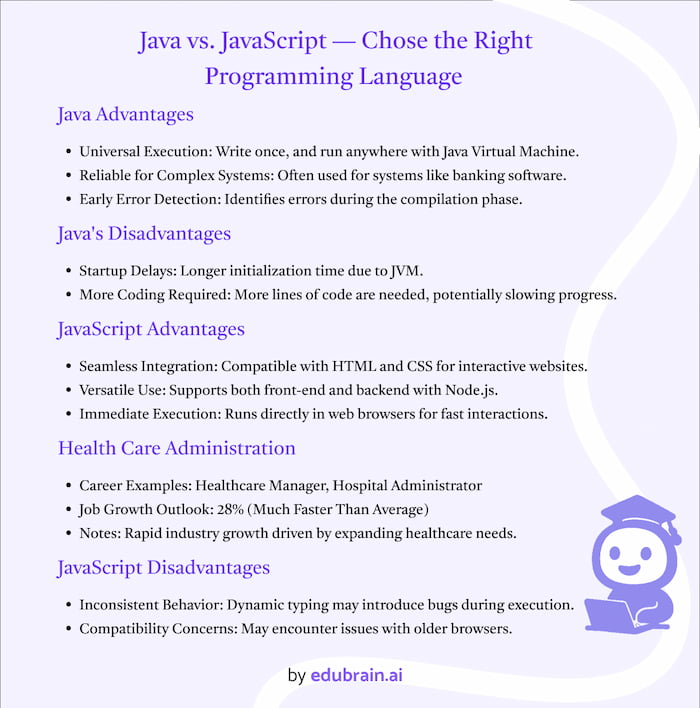
One of Java’s biggest strengths is its platform independence. Thanks to the virtual machine, you can write code on one machine and run it on any other device. This makes Java incredibly versatile for cross-platform projects. Java is also known for its strong performance in large-scale systems. Another advantage is that Java is a strongly typed language. Errors are caught during compilation, helping developers spot issues early.
Where Java Falls Short
However, Java is a more complex language. It can be slow to start up because of the JVM. Java’s syntax is also very detailed. You often have to write more code compared to other languages. While this structure helps reduce errors, coding a compiled language can feel slower and tedious for beginners.
Advantages and Disadvantages of JavaScript
Why You Should Use JavaScript
It is easy to work with alongside CSS and HTML, making it perfect for front-end development. JavaScript achieves all functionalities, including dropdown menus and live updates on interactive websites. It is not limited to web browsers. Node.js allows JavaScript to achieve backend work, so developers can do front end and back-end with a single language. Speed is another reason why it is a crowd-favorite; it runs directly in the web browser.
Where JavaScript Struggles
But JavaScript isn’t perfect. Its dynamic typing can cause problems. Because a variable’s type can change, bugs can sneak in. There’s also the issue of browser compatibility. While modern browsers handle it well, older ones might not, forcing developers to do extra work.

Java or JavaScript: Which Should You Choose?
Both are worth learning. Learning JavaScript is a great starting ground if you are new to code. It is simpler and more accessible, specifically in making an interactive web page. There are rapid outcomes with small projects. Java is more appropriate for constructing large projects or apps. It is more formalized and introduces advanced programming concepts sooner.
- Career Opportunities: JavaScript can lead to careers in web development or full-stack roles. Java is widely used in banking, healthcare, and enterprise software. It’s also essential for Android development.
JavaScript is easier to learn as a first programming language. If you want to learn coding, you can start with small projects. If you’re exploring other languages, learning Python could also be a good idea (you might find a Python homework helper useful).
The Java language takes more time. Its strict rules can feel overwhelming, but they prepare you to think like a programmer for complex systems. There are plenty of ways to learn Java and JavaScript:
- Bootcamps: Short, focused programs to learn Java or JavaScript quickly.
- Online Courses: Affordable or free courses on platforms like EduBrain or Coursera.
- Apprenticeships: Training programs that let you gain real-world experience while learning.
Performance Comparison: Java vs JavaScript
Java and JavaScript are optimized for different tasks. Developers use Java in environments that demand robust performance. Java manages memory well and supports multithreading. JavaScript shines in web and mobile app development. Its event-driven model allows it to handle user interactions swiftly.
- Web Apps: JavaScript is the go-to. It updates the UI instantly without reloading pages.
- Enterprise Apps: Java is the better choice for big, complex systems.
Ecosystem and Tooling: JavaScript and Java
Java and JavaScript come in two languages, with different sets of tools that help developers build applications. These two languages use different tools.
- Java Tools
Java uses tools like Spring and Hibernate. Spring sets up web servers, and Apache Maven manages project parts. Java’s community is big, so you can find many tutorials and forums that help solve problems.
- JavaScript Tools
JavaScript uses React and Angular for building websites quickly. Node.js lets JavaScript handle server tasks, like managing databases. Vue.js makes fast websites that work on one page without reloading. The JavaScript community is always active, offering new updates and quick fixes.
Future Trends in Coding
Java continues to be essential in big business systems and is growing in cloud computing. It is a popular programming language among corporate developers. JavaScript keeps getting more popular, adding frameworks like React, Vue, and Angular to build web applications faster. Both are keeping up well with technological changes.
Conclusion: Which Language of Choice to Learn First?
Java and JavaScript serve different purposes. Consider Java if you need a strong, dependable foundation for large systems. JavaScript is better for making web pages interactive and works well for both front end and backend tasks.
Your choice between Java vs. JavaScript should match your project’s needs. For large systems, the complex language of Java is often the better option. JavaScript is typically preferred for web development projects that need fast interactivity. Whether you choose to study Java and JavaScript, or explore common programming alternatives like Python and C, gaining programming knowledge will immensely benefit your career.
Explore Similar Topics
Apps can help translate words for global communication and learn the language, but they miss the cultural understanding and meaning...
Computer science is the core of most modern work and tools that we use in our daily lives. Employers highly...