

CSE Citation Generator for Scientific Papers
Are you sure you you want to delete all the citations in this list?
Benefits of A CSE Citation Generator

Three CSE Systems with One Clear Choice
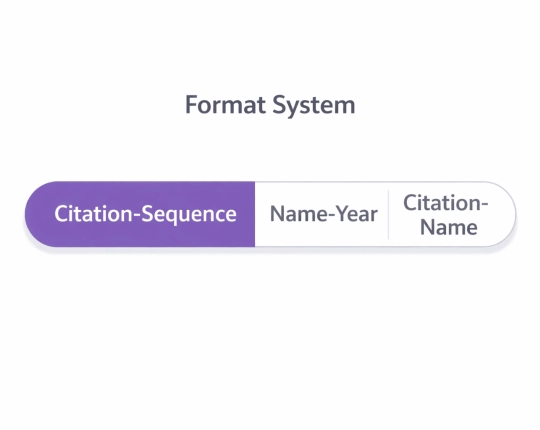
The Edubrain generator can handle all three CSE systems: citation–sequence, name–year, and citation–name. Pick one system and keep that single system across the full document.
In-Text Citations that Point at The Right Reference List
Each system links in text citations with end references. The link stays simple when author names and dates match across entries, and when the reference list follows the order the chosen system requires.
Fast Input from DOI, ISBN, or URL
The generator accepts a DOI for journal articles, an ISBN for books, or a URL for websites. One clean identifier often pulls stronger metadata than a title search alone, and Edubrain works best with that input.
Better Handling for Journal Articles
CSE journal formats use a set pattern with date, volume, issue, and page range or article number. The CSE Manual also prefers a DOI-based URL when one exists.
Less Risk from Quick Review Habits
Edubrain CSE citation generator can format, yet it cannot judge whether the fields look right. A short check for author order, date, journal title, and link type prevents many citation errors.

CSE Citation Style In Science Work: What Is It
CSE style sits under the Council of Science Editors, with guidance in the CSE Manual. The manual presents three systems for in-text references and shows how each system shapes the end references section.
This style shows up across scientific disciplines, with frequent use in physical sciences. Many academic papers and lab-focused courses accept CSE formats for scientific papers and reports.
CSE In-Text Systems And Citation Sequence Rules
CSE offers three valid paths. Each path uses the same core source details, yet the in text format and the reference list order change by system.
Name – Year System
Name–year uses parenthetical author and year in the text. The reference list runs in alphabetical order by author name. Many guides also call this author date.
Citation – Sequence System
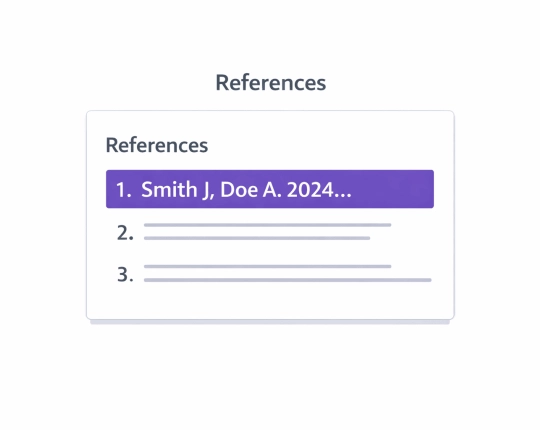
Citation–sequence uses numbers in the text. End references run in the order each source first appears in the text, and the same number stays with the same source each time it appears again.
Citation–Name System
Citation–name also uses numbers in the text. The difference sits at the end: references run in alphabetical order by the first author’s surname, then the list receives numbers in that alphabetical order. The in-text number stays the same as the list number, even when the first mention appears late in the paper.
CSE References For Common Source Types
CSE references share a consistent backbone: author, title, source container, date, plus identifiers such as DOI or URL when relevant. The exact punctuation and field order varies by type, so a quick check by source type helps.
- Journal Articles. CSE journal entries place the date before volume and issue, with a semicolon between date and volume, and a colon before the location element.
- Books. These rely on author, title, place, publisher, and date. If the book has an edition, keep the edition detail with the title element in the reference.
- Book Chapters. A chapter needs chapter author and chapter title, plus book title and editor details. Chapter pages matter here, since the chapter acts as the cited unit rather than the full book.
- Websites. Web sources often rely on author as a person or an organisation, plus a date when the page shows one. Many templates also include an access date for pages that can change.
- Reports And Technical Documents. Reports often list an organisation as author and publisher. Keep the report title, year, and URL. If a report number exists, keep it near the title so readers can locate the exact document.
- Media Pages And Online Video. Media pages can show several dates. Pick the date that reflects publication on the platform, then keep the URL. Many citation tools offer templates for these formats as well.
What To Check Before Final Copy
A free CSE citation generator can produce a usable draft, yet a quick audit prevents most errors. Here’s what should be checked before delivering the paper.
See if the CSE system stays consistent across the paper (N–Y, C–S, or C–N).
- Each in-text citation should have a matching item in the reference list.
- Author names should match across every mention, with the same spelling each time.
- Publication date and year must match the source record.
- DOI should appear as a DOI-based URL when available.
- Websites must show an access date when the format calls for one.

Typical CSE Problems and Quick Fixes
This table lists common CSE errors plus a simple fix that keeps citations aligned with the chosen system.
| Common Mistake | Quick Fix |
| Mixed CSE systems across one document | Pick one system (N–Y, C–S, or C–N) and apply it across every citation and the full reference list. |
| Citation–sequence list placed in alphabetical order | Switch the end references order back to first appearance order, and keep number reuse for repeat sources. |
| Journal article missing key elements | Add date, volume, issue, and page range or article number, then add a DOI-based URL when available. |
| Website entry lacks access date where the template expects it | Add the access date in the reference entry so the citation reflects a stable point in time. |
Explore More Citation Styles



 Unlimited AI homework help

 Diagram Generator, Flashcard Maker, Notes Generator, Research Assistant, Answer Generator, AI Homework Helper & AI Detector