Everyone comes to the moment when they need to select an undergraduate major to study. It is one of the...

Ten Principles of Economics: Top 10 Principles That Improve Market Outcomes
Every choice comes with a cost, time, money, or a missed opportunity. People deal with limits every day, whether at home, in business, or in government. When someone picks one thing over another, economic theories and economic concepts help explain why. Studying economics reveals how we balance trade-offs, prices, and the role of policy. These ideas help us make better sense of how decision-makers act and why systems work the way they do in modern economics.
Table of Content
ToggleBasic Economic Principles: How People Make Decisions
To understand the economy, we must first look at individual choices. In the Ten Principles of Economics (often just called the 10 principles), popularized by Harvard economist N. Gregory Mankiw, the foundational ideas of microeconomics revolve around how humans manage scarce resources.
No Such Thing as a Free Lunch: Opportunity Cost and the Cost of Something
Nothing comes without limits. Time, money, and resources all run out at some point. This simple fact forces people and governments into a constant tradeoff regarding efficiency and equity.
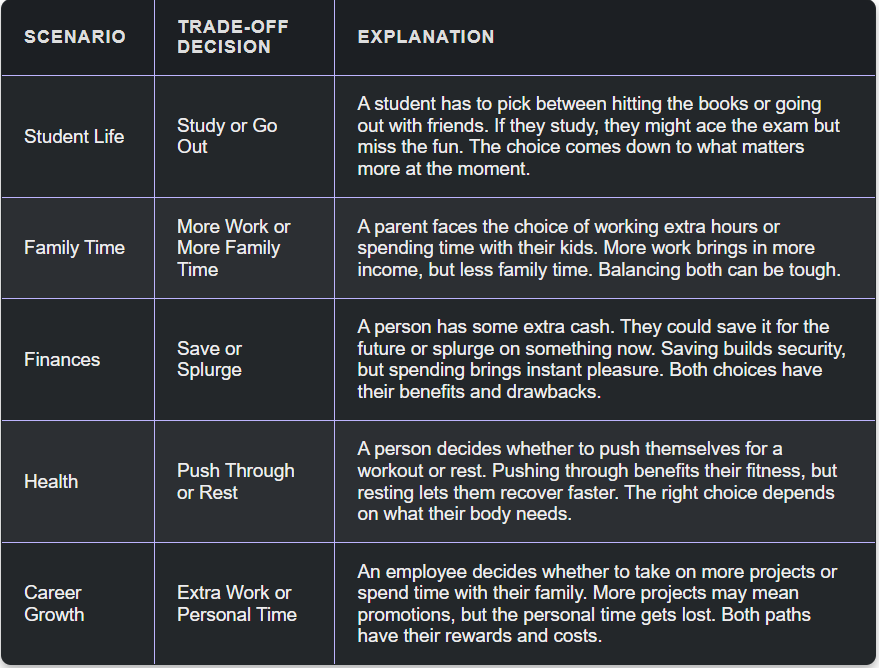
Because resources are scarce, there is no such thing as a free lunch. Picking one option often means leaving another behind. The cost of something is what you give up to get it—that’s your opportunity cost. A student who starts college may lose a steady paycheck. A family that spends on a new car might hold off on home repairs. Some common trade-offs in daily life include:
- More time at work vs. more time at home.
- Spending now vs. saving for later.
- Lower price vs. higher quality.

Leaders deal with the same problem, just on a bigger scale. If a country puts $5 billion into infrastructure to increase economic capacity, it gives up the chance to cut taxes.
Assume That People Are Rational: Why We Think at the Margin
The majority of many decisions are not black or white. Economics plays a huge role in revealing that rational people make decisions based on an incremental change—an additional hour, dollar, or unit. To allocate resources efficiently, economists assume that people are rational and that they think at the margin.
Costs and Benefits of Alternative Courses of Action
A student can ask whether it will be more helpful than harmful to have an extra hour of studying. The marginal benefit of that hour could make a grade, but the marginal cost is lost sleep. Evaluating the benefits of alternative courses of action compared to their costs is the key to good decisions.
When producing an extra unit is more expensive than the revenue it is generating, it is time to quit. You must carefully weigh the costs and benefits of alternative courses of action rather than focusing on past, unrecoverable investments. Such a tool as the best AI for finance homework allows students to conduct marginal analysis, experiment with various cases and observe how making a small selection would result in a worse or a better outcome.
The Power of an Incentive in Economic Activity
A rational human being tends to do what is worth doing. Behavioral economics shows that people respond to an incentive. A reward can attract a person to an option, whilst a cost can repel them. These responses appear in all places—school, work, law, and fiscal policy.
Incentives operate in straightforward manners that affect economic activity:
- Work bonuses: Extra pay for longer hours.
- Shop discounts: Lower market prices clear shelf space.
- Health incentives: Free goods for vaccination checkups.
Governments use these tools to steer bigger decisions. A carbon tax makes the cost of pollution expensive, prompting firms to pivot. With electric cars, subsidies lower costs, and more people are willing to buy them.
Some stats:In 2023, the Department of Energy reported an increase in the sales of electric cars above 50% in the U.S. states with stronger electric car support.
Most countries increased the tax on cigarettes, which caused a decline in the smoking rates by 25 % in the last decade. It is helpful to use real cases when students learn how these policies shape their behavior.
With some tools today, students can take pictures and get answers, which simplifies testing the impact of various incentives or tax options on the decision. This practical method enables them to trace the reasoning of public policymaking and learn how slight adjustments in cost or demand would change the behavior in society.
How We Interact: Market Outcomes and the Economy
When households and firms interact in the market, they determine what gets produced and who gets it.
Mankiw on How to Improve Market Outcomes
In free market economies, prices instruct people and businesses on what to do. Higher prices lead to families purchasing less and companies producing more. This occurs automatically. Adam Smith, in his famous book The Wealth of Nations, described this self-organizing nature as the “invisible hand.” Driven by self-interest, businesses produce goods and services that consumers are willing to pay for.
When people and firms adjust to market forces, goods and services reach the places where they are most needed. However, when governments try to freeze prices (like rent control or fuel caps), shortages often follow.
Market Systems and the Role of Prices
Prices instruct the people and businesses on what to do. Higher prices lead to families purchasing less and companies producing more. When prices are lowered, consumers purchase more, and companies reduce. This occurs automatically without anyone to take care of it. In 2022, oil prices surpassed $120 a barrel. The government data showed that U.S. drivers drove approximately 5% less, and oil output increased by approximately 6%. All these little decisions pull resources towards those goods and services that people desire the most.
When governments try to freeze prices, problems often follow. Rent control keeps costs down for tenants but slows new building. Cities with strict rent caps built 15–20% fewer homes than those without. In the 1970s, fuel price caps in the U.S. left gas stations empty and drivers in long lines. Prices may rise or fall, but they show how supply and use match. When people and firms adjust to them, goods and services reach the places where they are most needed.
Trade Between Countries and Comparative Advantage
No country has the ability to produce goods at the absolute lowest cost for everything. Trade between countries works because of comparative advantage. Each side produces what it can do at a lower relative cost and exchanges for the rest. Anyone who tries to solve political science question sets on trade and policy quickly sees how these principles explain the way nations depend on each other. This division of labor improves outcomes by providing:
- Higher output: Nations that focus on one task produce more.
- Lower costs: Specialization reduces waste.
- Better variety: Trade provides access to a greater variety of goods.
- Shared gains: Even if one country is more efficient at many things, both sides still benefit by focusing on relative strengths.
A simple case is wine and cars. When one nation can manufacture wine at a relative low rate and the other manufactures cars at a relative low rate, then both nations benefit through trade. Each comes up with more wine and cars than they would have had they attempted to make both separately. History confirms this.
NAFTA linked the trio of the U.S and Canada, and Mexico in production chains across the border. The single market in Europe, is characterized by free movement of goods, where Germany specializes in cars, whereas Spain specializes in farm products. Nowadays, supply chains are designed worldwide, with digital systems and transport solutions that connect many areas in a single end product.
Market Failure and Government Intervention
Markets are not always self-regulating. Market failure occurs when the market fails to allocate resources efficiently on its own. An externality, such as a factory emitting smoke detrimental to health, makes others bear the expenses. To solve this, governments impose taxes or regulations. Anti-trust laws also prevent monopolies from artificially inflating prices for a good or service. While the invisible hand is powerful, government policy is sometimes needed to improve market outcomes.
Governments have a broader role in everyday life. They apply contracts, food inspection, and health services to the inability of people to pay privately. Taxes and transfers make the poor poorer and more stable. Nevertheless, intervention is not ideal. Policies can be politically inclined and not based on needs. There are programs that are resource wasters or with poor management. This combination of advantages and disadvantages is the reason the role of government in the economy is always the center of discussion.
The Economy as a Whole: Macroeconomics
The last three principles of Mankiw’s list address the economy as a whole, shifting the focus to macroeconomics.
The Tradeoff Between Inflation and Unemployment
There is a recognized short-run tradeoff between inflation and unemployment, often illustrated by the Phillips curve. Efforts to cut unemployment can lift prices, while strict control of prices may slow hiring. Striking the right balance during the business cycle and managing economic fluctuations is one of the hardest challenges for policymakers following the theories of John Maynard Keynes or classical economics.
Money Supply, Inflation, and the Federal Reserve
Inflation is most evident when households face rising costs for food, fuel, or housing. It increases when the money supply grows too fast, eroding the purchasing power of the dollar.
Institutions like the Federal Reserve (or the Federal Reserve Bank in the U.S.) attempt to keep prices stable. When inflation increases, they increase interest rates to decrease demand. The American Economic Association and groups like the Congressional Budget Office closely monitor these metrics to guide policy.
- The European Central Bank sets a goal of around 2% inflation.
- Countries with double-digit inflation often see weaker growth.
Standard of Living Depends on Economic Growth
Why are living standards higher in some countries than others? A country’s standard of living depends entirely on its ability to produce goods and services.
Productivity matters immensely for long-term economic growth. It measures how much output workers create with the same effort or means of production. Gains here support higher wages and a better standard of living.
Inflation, Productivity, and Economic Stability
Inflation is most evident when households become more expensive to feed, fuel, or house. It increases when excessive amounts of money target too little of few goods or the supply cannot meet the demand. Small increments are healthy, but huge spikes undermine the worth of cash. According to the International Monetary Fund (IMF), the highest level of inflation in decades in the world was 8.7 in 2022. Bureau of Labor Statistics data show that the U.S. consumer prices increased by 9.1% in June 2022, the fastest rise since the early 1980s. Central banks attempt to keep prices at par. When inflation increases, they increase interest rates to decrease demand, and when the market economy is slowing, they reduce interest rates to stimulate expenditure. Stability assists households and businesses to be more certain in planning for their well being. Facts on inflation and policy:
- The European Central Bank sets a goal of around 2% inflation.
- The U.S. Federal Reserve increased rates from near zero in 2021 to over 5% in 2023 to bring inflation down.
- Countries with double-digit inflation often see weaker growth and falling trust in their currency.
Productivity matters just as much for long-term progress. It measures how much output workers create with the same effort or capital. Gains here support higher wages and better living standards. U.S. data show nonfarm productivity grew by 3.5% in Q3 2023, the fastest pace in nearly three years. There is also a short-run trade-off between inflation and jobs.
The Phillips Curve describes how efforts to cut unemployment can lift prices, while strict control of prices may slow hiring. Striking the right balance is one of the hardest challenges for central banks. Modern study tools, such as learning platforms that offer AI for economics homework, include inflation, money supply, and productivity modules. They help learners see how small policy moves ripple across prices, jobs, and growth.
Why Economic Education Matters
Life involves constant choices. Basic economic principles explain these trade-offs through prices, incentives, and rules. Economic education helps people perceive more than the surface result. By understanding the balance of inflation and unemployment, the role of the central bank, and the true cost of our decisions, individuals are empowered to evaluate policies and participate fully in the global economy.
Economic literacy helps people perceive more than the surface result. It underscores what is missed when one way is taken instead of the other. We cannot have a right or wrong answer, but with definite tools, we can compare. It is with this knowledge that individuals are able to evaluate policies, make trade-offs, and choose differently to take into account much more than only personal needs.
Explore Similar Topics
Microeconomics is a fundamental branch of economics that deals with the study of individual consumers, firms, and markets behavior. In...
When exploring fields in numerical analysis, finance and economics often emerge as leading options. But what’s the difference? If you...