Many students say math is the subject they fear the most. Not because they never understood numbers, but because at...

What Does ACT Stand For in the College Admission Process
ACT shows up in every admissions chat. The American College Test, or ACT, gives a composite score on a 1 to 36 scale that colleges use alongside your GPA and courses in college admissions. Unlike the exam from the College Board, the content and structure of the ACT includes English, math, reading, and science. It also offers an optional writing test. This article provides high school students with clear facts, sharp test prep tips, and the current policy context on college testing.
Table of Content
ToggleWhat Does the Acronym Really Stand For
Many still ask what the letters ACT actually mean or if the name stands for anything today. The acronym originally stood for American College Testing when it was first introduced. Today, the organization, ACT Inc, uses just the letters. To understand what does ACT stand for practically, it is a college entrance examination designed to assess your college readiness and predict your success in postsecondary education.
A Brief Origin of the ACT Test
The ACT test was first introduced in 1959. Everett Franklin Lindquist, often simply referred to as Lindquist, from the University of Iowa developed it. The testing program evolved as a direct alternative to the SAT, which was then known as the Scholastic Aptitude Test (measuring Scholastic Aptitude). While early competing tests focused on cognitive reasoning, this new test used a curriculum-based approach for admissions testing.
At school, most of the work is still coming from daily lessons and assignments. Many students go through drafts by independently verifying math steps, grammar patterns, and citation formats, and a homework checker may be one of several regular tools in that process. The main thing is still getting the right answer, using clear reasoning, and being consistent across tasks, which are also the skills tested in college entrance exams.
Content and Structure When You Take the ACT
If you plan to take the ACT, be aware that the exam consists of four sections: English, mathematics, a reading test, and science reasoning. There is also an optional writing section. Test takers face multiple-choice test questions. While early versions decades ago included a social studies test for general social studies, today’s layout is highly streamlined.

This composite score is what most admissions teams consider, along with the applicant’s grades and extracurricular activities, when reviewing the college application. Sections and pacing for test day:
| Section | Questions | Time | Focus |
| English | 75 | 45 minutes | Grammar, usage, and rhetorical skills |
| Math | 60 | 60 minutes | Algebra up to basic trigonometry |
| Reading | 40 | 35 minutes | Fast comprehension across four passages |
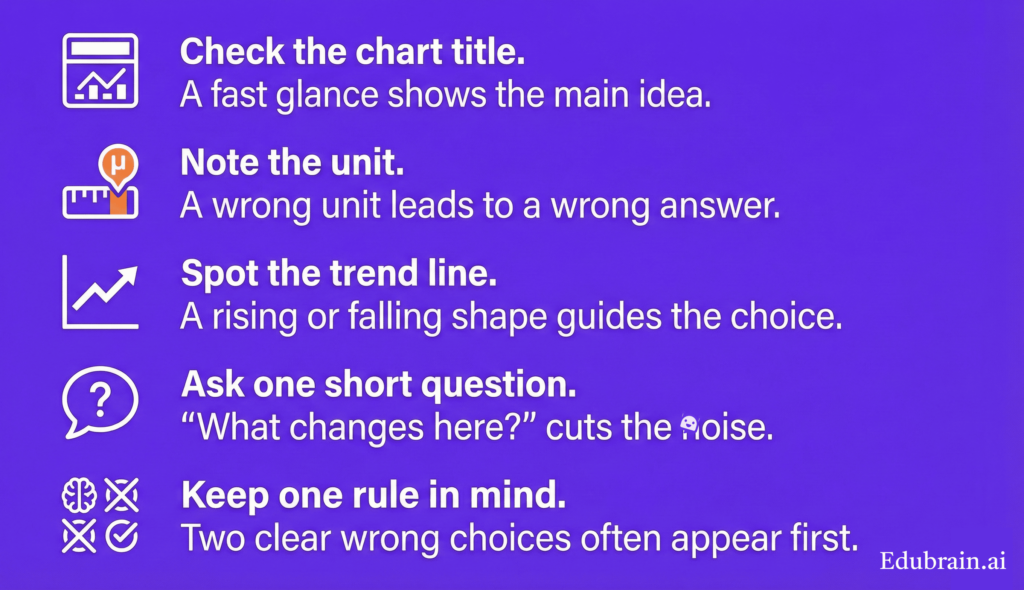
| Science | 40 | 35 minutes | Data charts, experiments, and scientific reasoning |
| Writing (optional) | 1 essay | 40 minutes | Separate writing score; optional for many schools |
The science section is unique to this exam. Depending on your location, you can take it on paper or as a computer-based exam. Note that science and writing are distinct elements; the writing portion is strictly optional.
Understanding Your ACT Score and Score Ranges
Your ACT score is presented as a section score for each core area, plus an averaged composite score from 1–36. What makes a good test score? Check the score ranges of your target colleges and universities. While many students in the U.S. take the exam, aligning with your college list is smarter than chasing national averages. If you opt for the optional writing, it yields a separate score and does not change your composite.
The notion of “good” is largely subjective, and it depends on your list. Check out each university’s middle 50% range and set a target that is at least equal to that range. A “reach” goal is usually around the top quartile; a “solid” goal is a bit higher than the median. High school students who are also considering both the SAT and the ACT can use the same reasoning: align your score goals with the colleges rather than a national average.
SAT and ACT Trends in College Admissions
A large number of students taking the test do so in their junior year. Historically, up to 1.9 million students have taken it annually, though numbers shift as testing landscapes evolve. Many wonder how many students took the SAT versus the ACT; it often varies by state. Most teams view the SAT and ACT equally. Even in a test-optional landscape, strong score reports provide helpful score information for entry-level college course placement.
Colleges in many states use a superscore approach, which combines the highest section results across different test dates. State testing policies also influence participation numbers. In ordinary schoolwork, students often review sentence structure or compare wording across drafts, and tools already familiar from class, including an English AI solver, may simply appear as part of that routine. Through updates and small format shifts, the test’s core layout stays the same: English, Math, Reading, Science, and an optional writing task. Most colleges view ACT and SAT scores equally when evaluating applications.
ACT and SAT Key Differences for Admission
When considering the ACT and SAT for admission, both hold equal weight. Many students weigh the College Board exam against the ACT. The ACT and the SAT differ primarily in pacing and format. The SAT is now digital and adaptive, while the ACT gives you more questions in less time. There are no longer any SAT subject tests, so students rely entirely on the main exams.
| Feature | ACT | SAT |
| Core sections | English, Math, Reading, Science | Reading & Writing, Math |
| Essay | Optional | No essay |
| Format | Paper or computer (test center) | Digital (adaptive) |
| Pace | More items in less time | Fewer items with more time per item |
| Score scale | 1-36 composite | 400–1600 total |
| Calculator rules | The calculator allowed for all math. | Built-in calculator tool |
| International sites | Yes | Yes |
| Best fit signal | Comfortable with Science data | Prefers a two-section setup |
Preparation for either test requires time and repeated correction. Students often return to older work, check the order of steps in math or the structure of sentences in English, and compare different solution paths. A math solver from an image can show each written step in a clear sequence, but the main progress still comes from steady practice and clear feedback. The key is to select the format where the pace feels stable and errors are easier to spot before test day.
Should You Take the SAT or ACT
To decide whether to take either the SAT or ACT, try taking a full-length practice tests set or a single practice test for both. Test-takers comfortable with quick data interpretation might prefer the enhanced ACT. If you previously took the PSAT, you might lean toward taking the SAT. The choice to take the SAT or ACT depends entirely on where you feel most confident. Some students even take the SAT and the ACT to see which yields a better percentile.
How Colleges Use the SAT Score or ACT Result
Colleges will evaluate the use of the ACT or an SAT score alongside your high school grades. The reading and writing sections help them assess literacy. Good scores can help you avoid remedial secondary education overlap and place right into credit-bearing classes. You can always retake the exam to improve your standing.
ACT Resources for Practice and Registration
To succeed, utilize official ACT resources like study guides, tools like Magoosh online prep, and free practice questions. Registration requires planning, as seats fill up fast. If finances are tight, a fee waiver removes the base cost. Whether you take the paper version or a computer-based format, your preparation dictates your success.
Registration, Fees, and Waivers
This section is important because test dates, seat limits, and fees determine the time when a student can take the ACT. Registration is first-come, first-served online, and seats are filled accordingly, so timing matters. A fee waiver is offered to a student who comes under the specified income bracket; thus, the cost of the test and score report is waived so that money does not become a barrier for access.
-
Dates and Sign-Up
ACT Inc. conducts tests in the U.S. over various dates from late summer until spring, with some seats available in early fall. Overseas locations have fewer test dates. You can select either paper or computer mode at the local test center. While registering, students are allowed to send their score reports to four colleges free of charge until the given deadline; if you change your mind after that, you may have to pay a certain amount. This is a standardized test having identical content irrespective of the location.
-
What You Pay
The minimum price is for the four core tests: English, math, reading, and science. The optional writing test will add to the cost of the test; a few areas may have an international surcharge as well. The current prices can be found on the ACT site and may change from year to year. Please be aware that the ACT does not offer an optional science section, nor can you take an optional science test. Science is always one of the cores.
-
Waivers that Widen Access
Fee waivers take off the primary ACT fee and a few score report charges for the qualifying students. A student should be studying in a high school in the U.S., fulfill the income requirements as per the documentation, and take the test on an official national date. The waiver is for the things mentioned by the ACT only and not for the additional services. The exact amount of fees, including the optional writing section and any surcharge, should be taken from the current ACT fees page.
Score Use: Admissions, Placement, and Scholarships
Colleges look at ACT scores along with grades, course choices, activities, and essays. The section scores in English, math, reading, and science give more detail about academic preparation and often guide placement in first-year courses. A score above a college’s middle range still supports an application, even at test-optional campuses. Some departments also use ACT results for merit-based awards or to determine direct entry into credit-bearing classes. Policies differ by campus and can shift, so each college website needs a direct check. Common points colleges review:
- The level of courses taken
- Grades across multiple terms
- Section scores in core subjects
- The match between program choice and academic record
During practice, students often look back at how they handled charts or short experiment summaries in the science section. In this part of the review, a science AI solver can show the order of steps in a data question, while the main progress still comes from class work, correction of errors, regular practice sets, and steady control of pace. The goal is for the score to match the skills already built over time.
Conclusion
The ACT is still only one component of a bigger application case. Results are an extra detail to marks, studies, and interests, and they assist colleges in determining which classes a student should take. Fixing errors, regulating speed, and practicing the test’s exercises are the most effective ways to prepare. Gradually, the score is an indication of the abilities that have already been developed at school, and the result is the outcome that is continued in college.
Explore Similar Topics
Performing calculations in your mind may be challenging for many. It may be doing sums in a short time, tip-calculating,...
Are you a high school student curious about chemistry? Many summer programs are available to help you explore this exciting...