
Everyone comes to the moment when they need to select an undergraduate major to study. It is one of the...

Career Opportunities: What You Can Do With a History Degree or Degree in History
Many people ask what a degree in history is good for beyond teaching. Surprisingly, a history degree opens up many avenues. It’s not only about dates and facts. For a history major, this study path helps you analyze complex issues and understand change over time. You learn to back your views with strong evidence and express ideas clearly. These skills are valuable in any occupation that values critical thinking and clear communication.
This post aims to illuminate the diverse career opportunities available to history graduates. A history degree opens doors to many careers in the job market, significantly lowering the risk of unemployment. We’ll look at opportunities in education, the museum sector, government, and the private sector.
Table of Content
ToggleWhat You Learn From a History Degree Program
Pursuing a history degree is more than just studying history and the past. A history program helps explain the forces that shape events and decisions, providing a global perspective. History students examine major changes, from ancient empires to modern shifts, gaining immense cultural awareness. They learn how historical events connect to current issues.
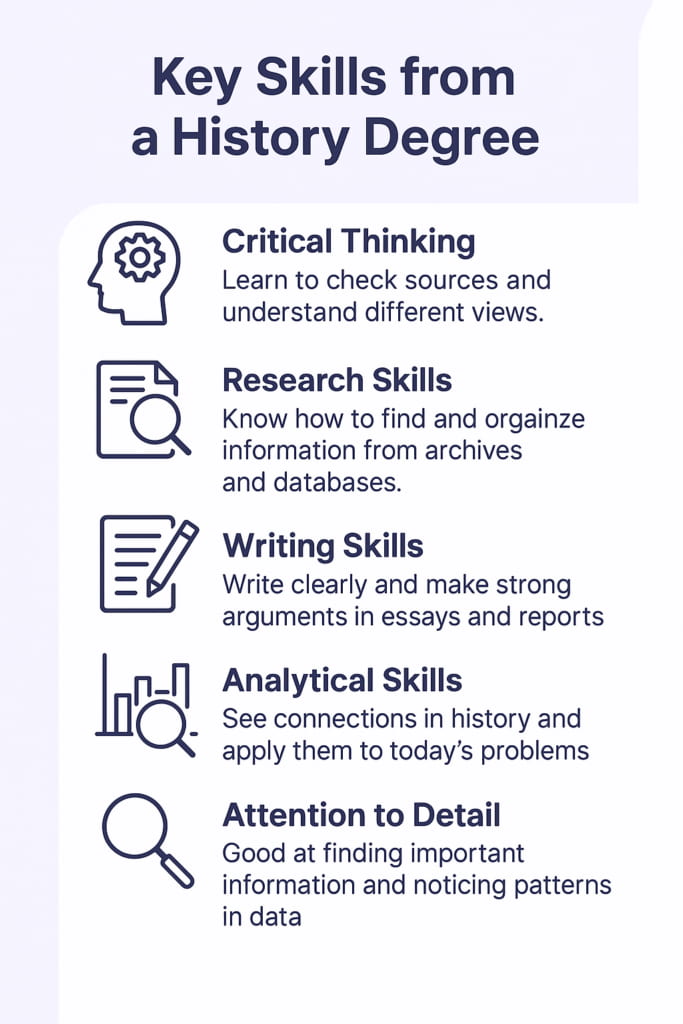
The skills gained are highly transferable: problem-solving, thinking skills, research, and writing. Critical thinking is a core part of historical training. Students examine primary sources, compare views from different perspectives, and build arguments using facts. Tools like EduBrain can support this process when they conduct research. They help students understand history and culture while they practice how to write clearly.
Writing improves through regular essays and research papers. Students learn how to make a clear point and support it with evidence. An understanding of historical context helps graduates succeed in many liberal arts fields, including publishing, law, and public policy.

Graduate Career Path in Education for a History Major
A graduate with a history degree is prepared to teach. A background in history may lead to roles as a teacher, but it also extends into administration:
- Primary Education: Graduates introduce young students to basic concepts.
- Secondary Education: Teachers in secondary education discuss detailed topics like world history or social studies. They prepare students for exams and help them develop analytical skills.
- Post-Secondary Education: To teach in colleges, candidates usually need degree programs like a master’s or PhD. Professors teach, research, and attend conferences. They specialize in a specific area of history.
In addition to teaching, graduates pursue roles in educational policymaking. They collaborate with educational boards or private consultancies to design curriculum standards.
Opportunities for History Graduates to Specialize in a Museum or Archive
Many people with a history major, including a museum curator, work in a museum or archive. A curator handles collections and plans exhibits. They conduct research on artifacts and work with teams to set up displays. Some also run public programs or lead history-related group visits. To gain hands-on experience, many students complete an internship during their coursework. To better understand how these roles work in practice, Edubrain.ai offers useful materials. It helps explain how museum and archive jobs are structured and what skills are needed to do them well.
An archivist focuses on storing and organizing documents. Every archive needs an archivist to keep records safe and easy to find. Both archivists and curators help the public learn. They create programs and materials for schools or historical societies, working directly in historic preservation.
Degree Programs and Real-World Roles in Government and Public Service
A history major can lead to a wide array of roles in local and federal government. These jobs often involve research related to humanity and society. Here are some common roles:
- Local Government: Work in city planning, public records, or local archives. Help with reports, research, or preserving local history. Some roles involve supporting community programs or working in city museums.
- Federal Government: Jobs in national archives, federal agencies, or departments like the foreign service, where diplomacy is key.
- Public History Projects: This includes writing for government websites or working on a documentary. A documentary researcher requires excellent organizational skills.
- Cultural Preservation: This work focuses on protecting buildings or traditions, often involving cultural resource management.
A history degree is useful because it teaches how to find good information and check facts.
Non-Traditional Jobs in Business for College Graduates
College graduates with a degree in history can also work in business. While not a specific career tied to history, the transferable skills apply to marketing, human resources, or research. In marketing, the work might include writing or studying customer trends (which overlaps with sociology).
The skills from a history degree are highly valued. Companies need people who can think critically and look at past events to connect them to the present. This helps with planning and making better decisions. That is why many employers are open to hiring a history major for an entry-level business role. Some graduates even pursue an MBA to boost their professional experience.
Higher Education and Academic Jobs
After finishing bachelor’s degrees, many choose graduate study. This could mean pursuing a master’s or PhD in history, art history, or a related subject like law. A significant percent of history majors go to law school, utilizing their research skills for litigation support. Preparing for standardized tests like the LSAT, GRE, GMAT, or even the MCAT requires the intense reading comprehension skills developed during history degree programs.
Academic work includes teaching students and preparing lessons. Most academic roles require a PhD, but you can start with smaller research jobs. It’s important to stay focused and manage complex tasks. Tools like history solver can support early skill-building. This path takes time, but it offers a clear specialization for those who enjoy explaining the past.
Final Words
A history degree can lead to many jobs. It is useful in education, a museum, government, business, and research. The skills gained, like clear writing, research, and critical thinking, are needed in many fields. This degree is not limited to one path. Some people teach, while others work with records, plan a real-world project, or support public service programs. Furthermore, some continue studying historical subjects and move into academic roles.
Anyone with a history major can find a career path that matches their interests. The key is to understand how these skills fit into different jobs and leverage your real-world capabilities. With the right approach, a history degree can offer steady and meaningful work in many areas.
Explore Similar Topics
Are you a high school student curious about chemistry? Many summer programs are available to help you explore this exciting...
People who are learning about education in college or university are typically studying to become teachers. Some people want to...